All terms
-
What Is a Shopify Theme App Extension?
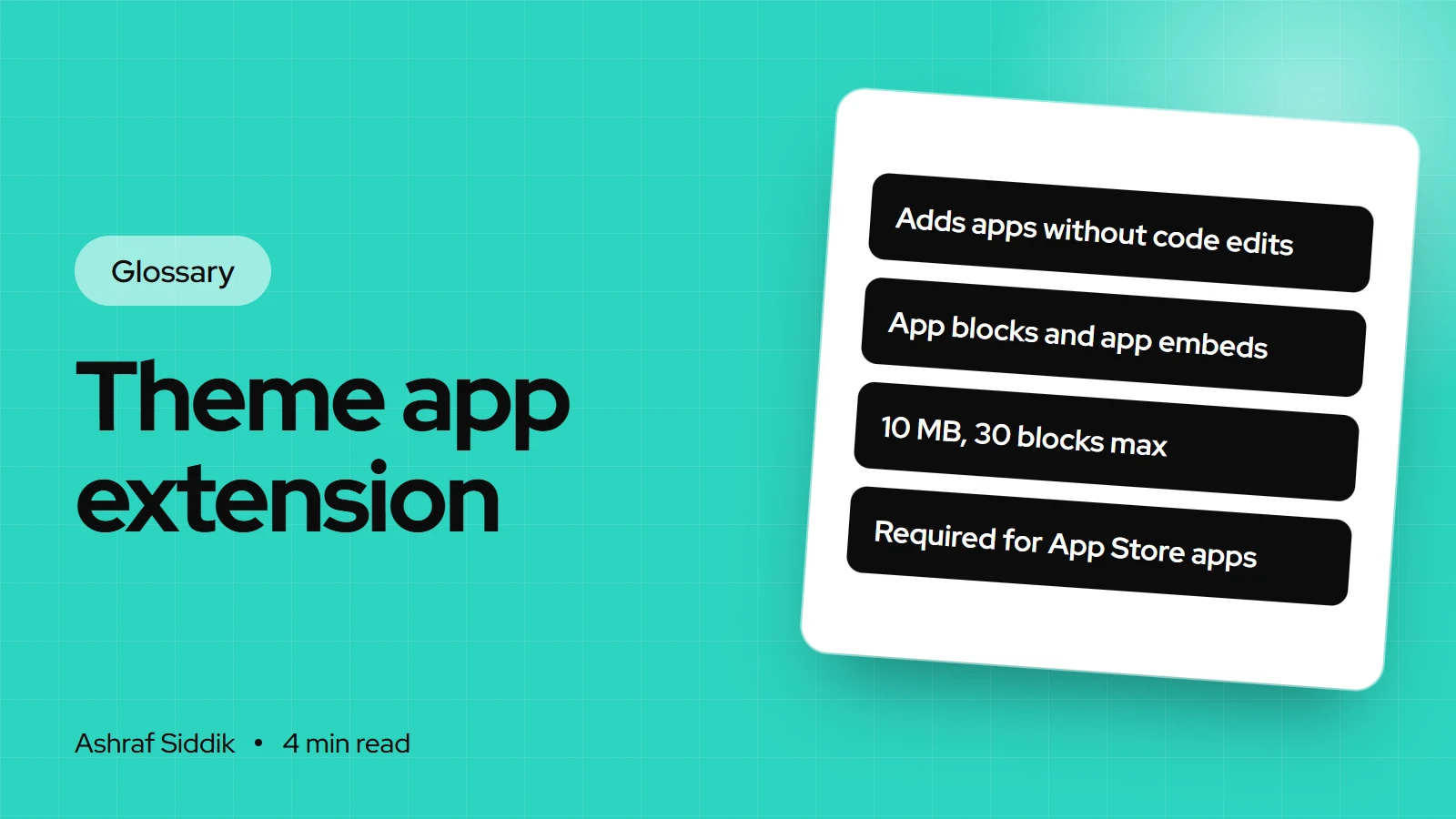
A theme app extension is how a Shopify app adds its features to your theme without anyone touching the code. Here is how it works, the two block types, and the limits Shopify enforces.
-
What Are Shopify Metaobjects? Custom Content Types Explained
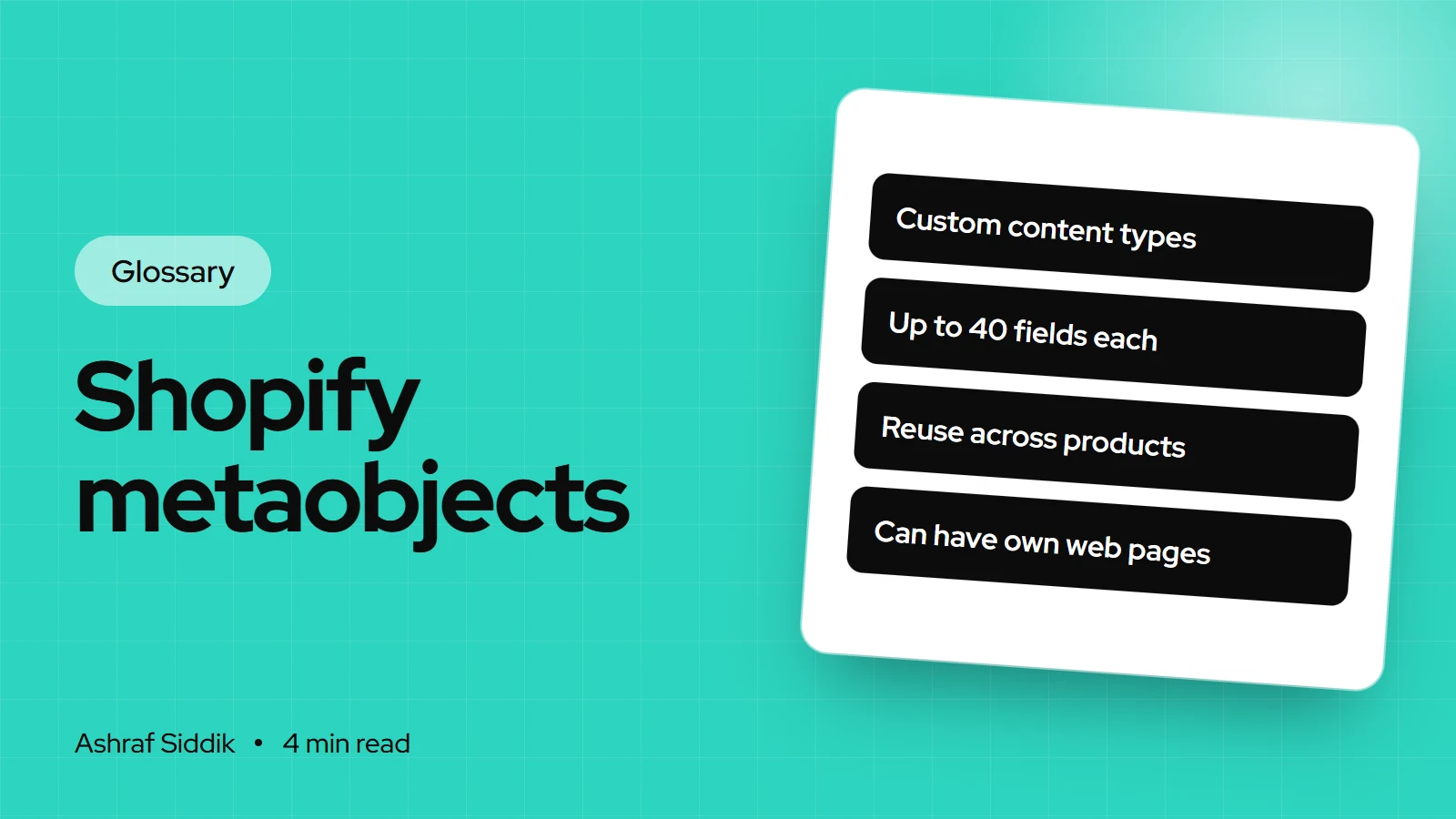
Metaobjects let you create your own content types in Shopify, such as size charts or FAQs, and reuse them across products. Here is how they work, real examples, and how to set one up.
-
What Are Shopify Metafields? How to Add Custom Product Data
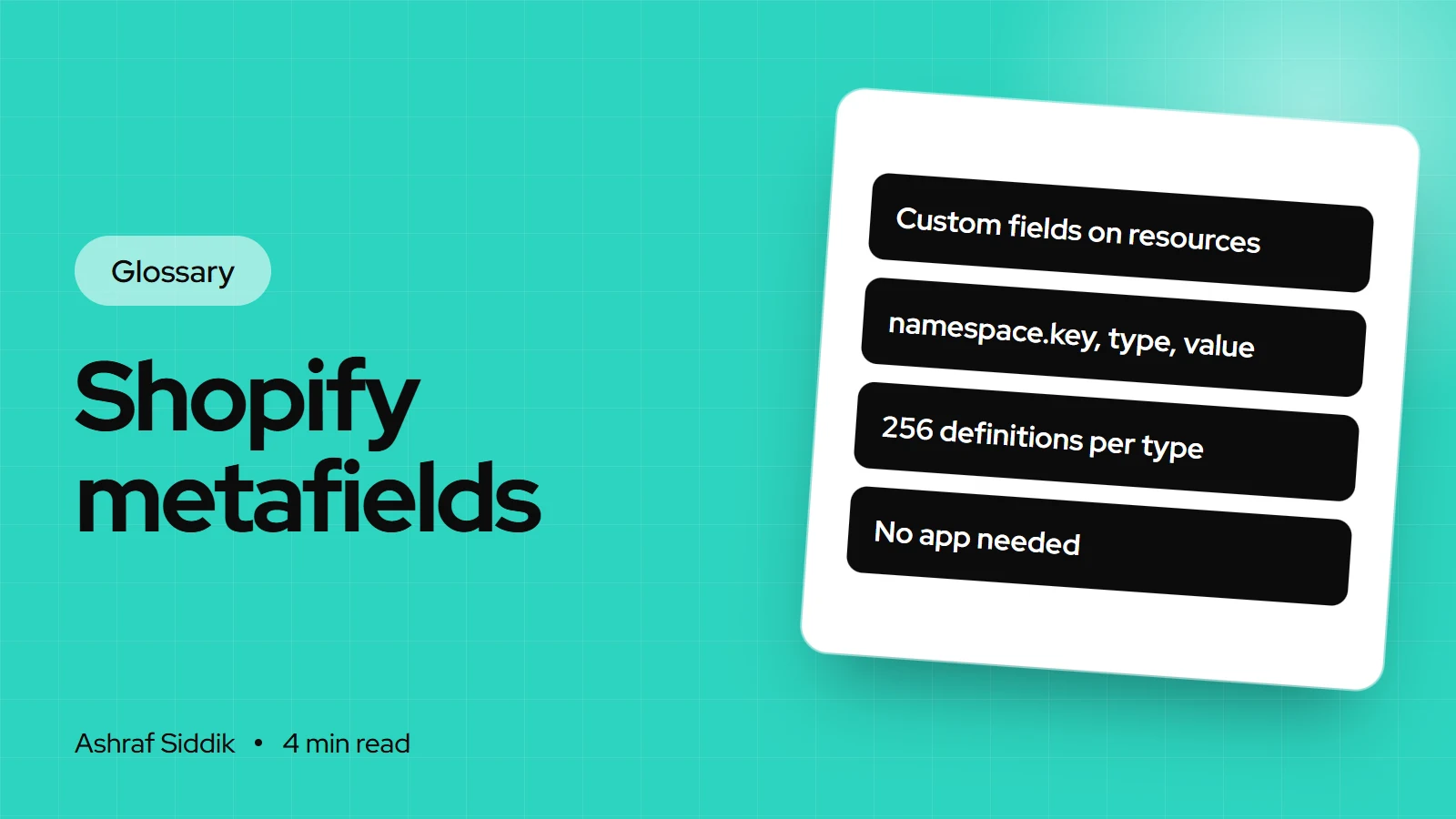
Metafields let you add your own fields to Shopify products, customers and orders. Here is how they work, how to add one in the admin, and how to show it on your store.
-
What Is Shopify Liquid? The Template Language Behind Every Shopify Theme
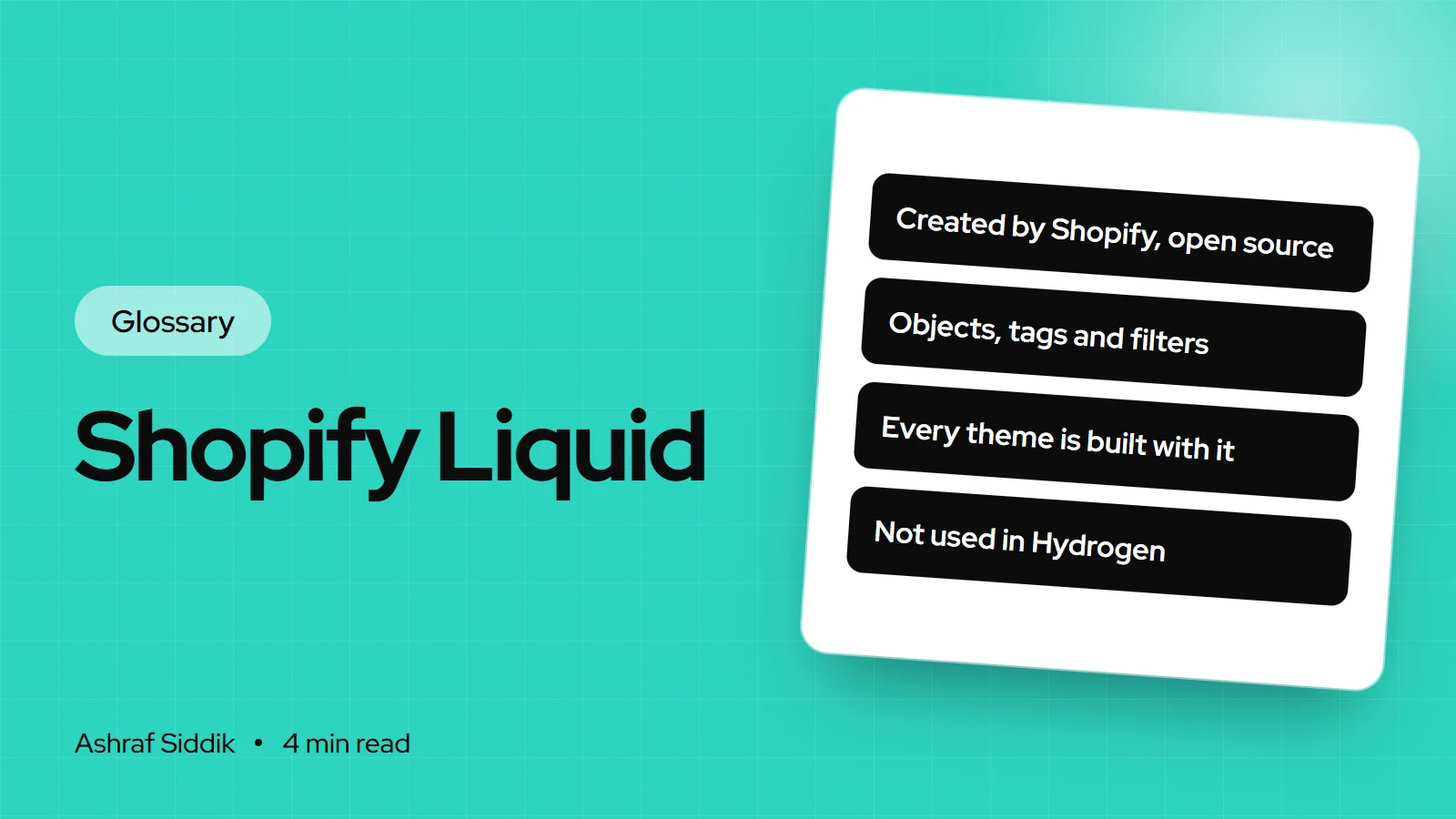
Liquid is the template language behind every Shopify theme. Here is how its objects, tags and filters work, where it lives in your theme, and when you actually need to touch it.
-
What Are Shopify Functions? Custom Discount, Shipping and Checkout Logic
Shopify Functions let an app change how Shopify calculates discounts, shows delivery and payment options, and validates carts. Here is how they work, what they can change, and which plans can use them.
-
What Is Shopify Flow? Free Automations Every Shopify Store Should Run
Shopify Flow is a free app that automates store tasks: when something happens, it checks your rules and acts. Here is how it works, what each plan gets, and six workflows worth switching on.
-
What Is Shopify 2.0 (Online Store 2.0)?
Shopify 2.0, officially Online Store 2.0, is the way modern Shopify themes are built. Here is what it changed, how it works, and how to tell whether your theme has it.
-
What Is Shopify Hydrogen? Headless Storefronts Explained for Store Owners
Hydrogen is Shopify's toolkit for building a custom, headless storefront instead of using a theme. Here is how it works, what Oxygen hosting includes, and when it is worth the extra cost.
-
What Is Crawl Budget? Does It Matter for Shopify Stores?
Crawl budget is how much of your site Google can and wants to crawl. Here is how it works, the site sizes where Google says it matters, and what it means for a Shopify store.
-
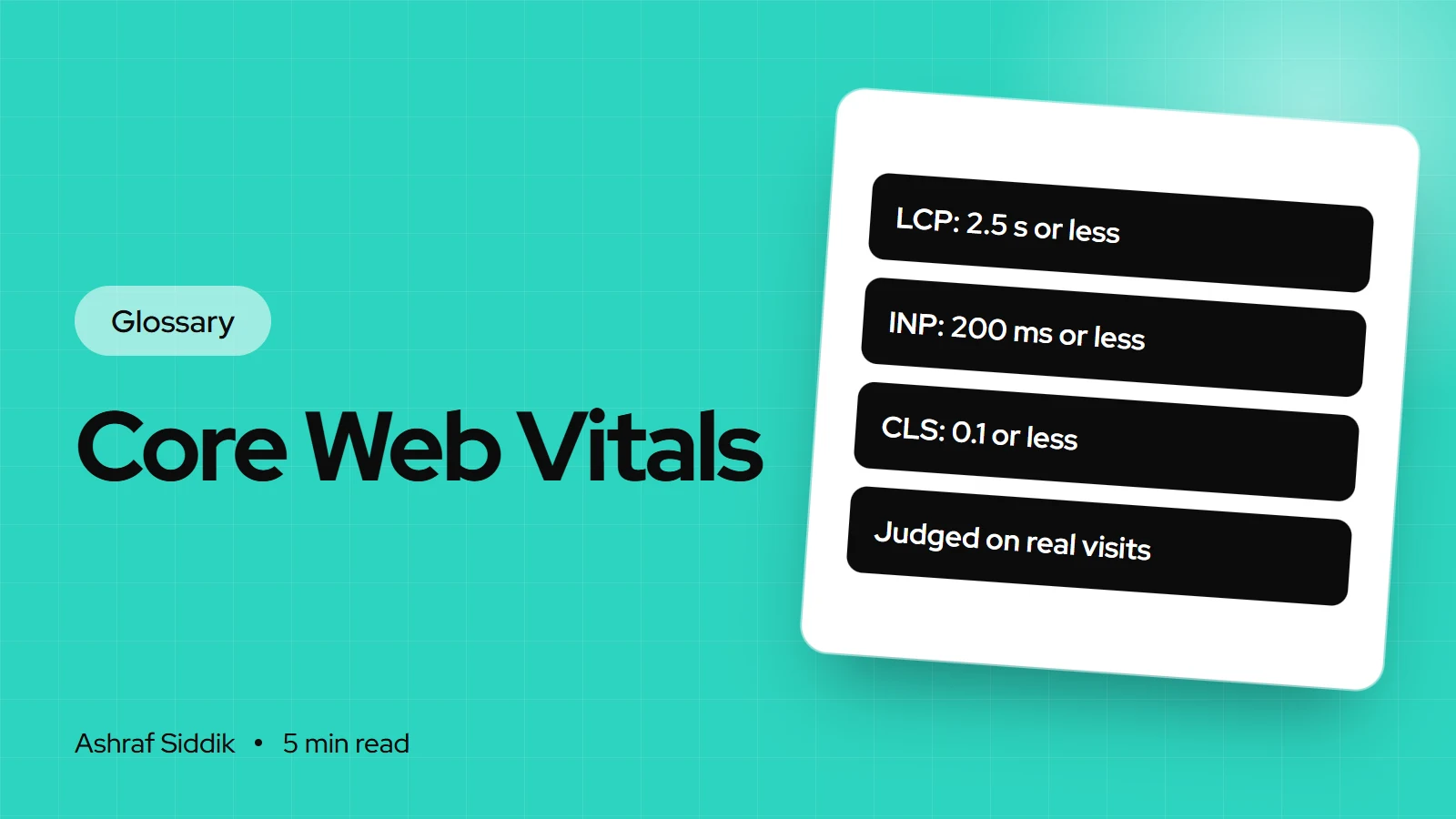
What Are Core Web Vitals? What They Mean for Your Shopify Store
Core Web Vitals are three Google metrics that score how fast a page loads, how quickly it responds and how stable it stays. Here is what each one means, the pass marks, and how to check them on a Shopify store.
-
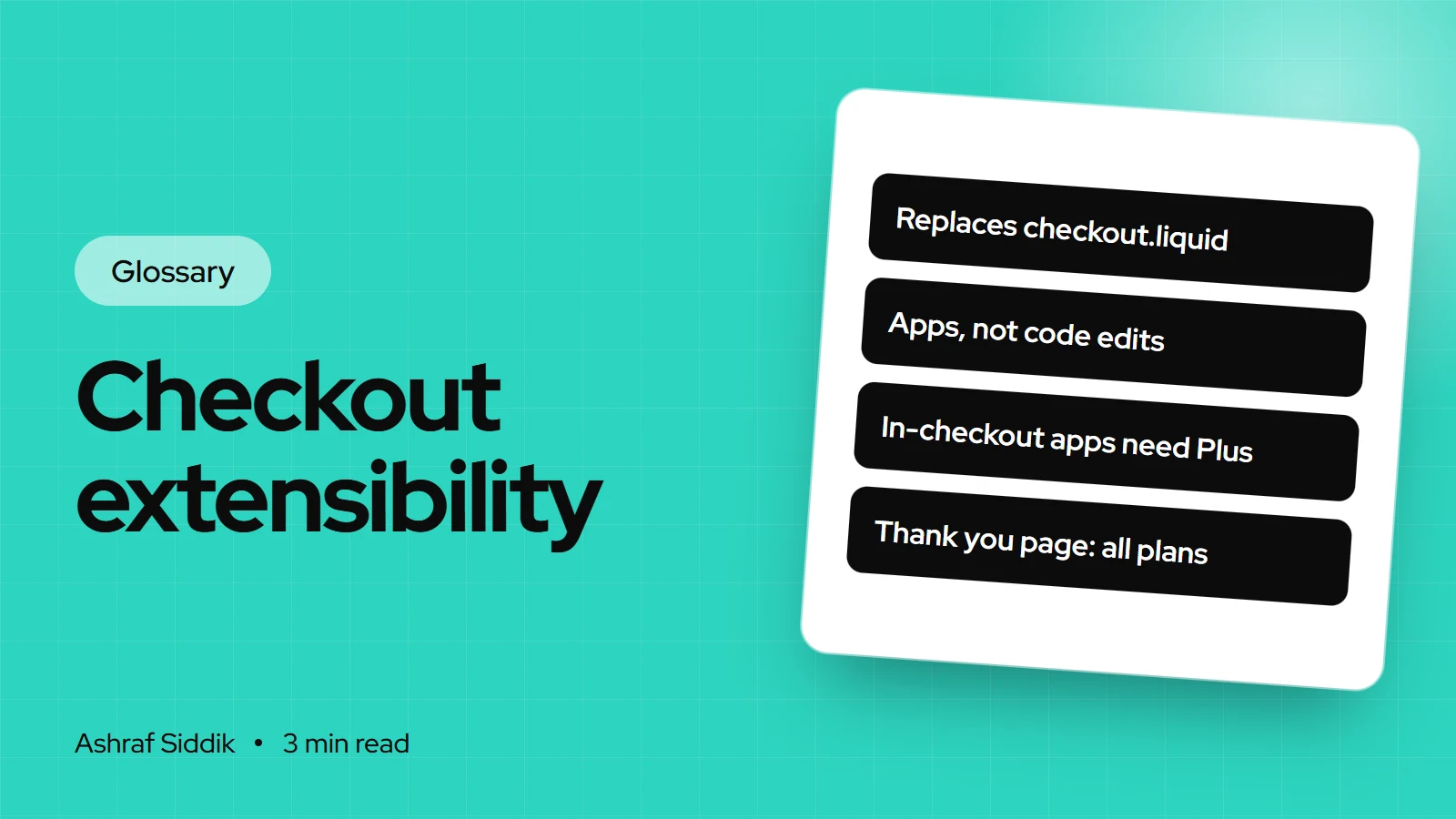
What Is Checkout Extensibility? Shopify's Checkout Customization Explained
Checkout extensibility is how Shopify checkout is customized now: with apps and extensions instead of checkout.liquid code. Here is what it includes, what each plan can change, and what happened to the old way.
-
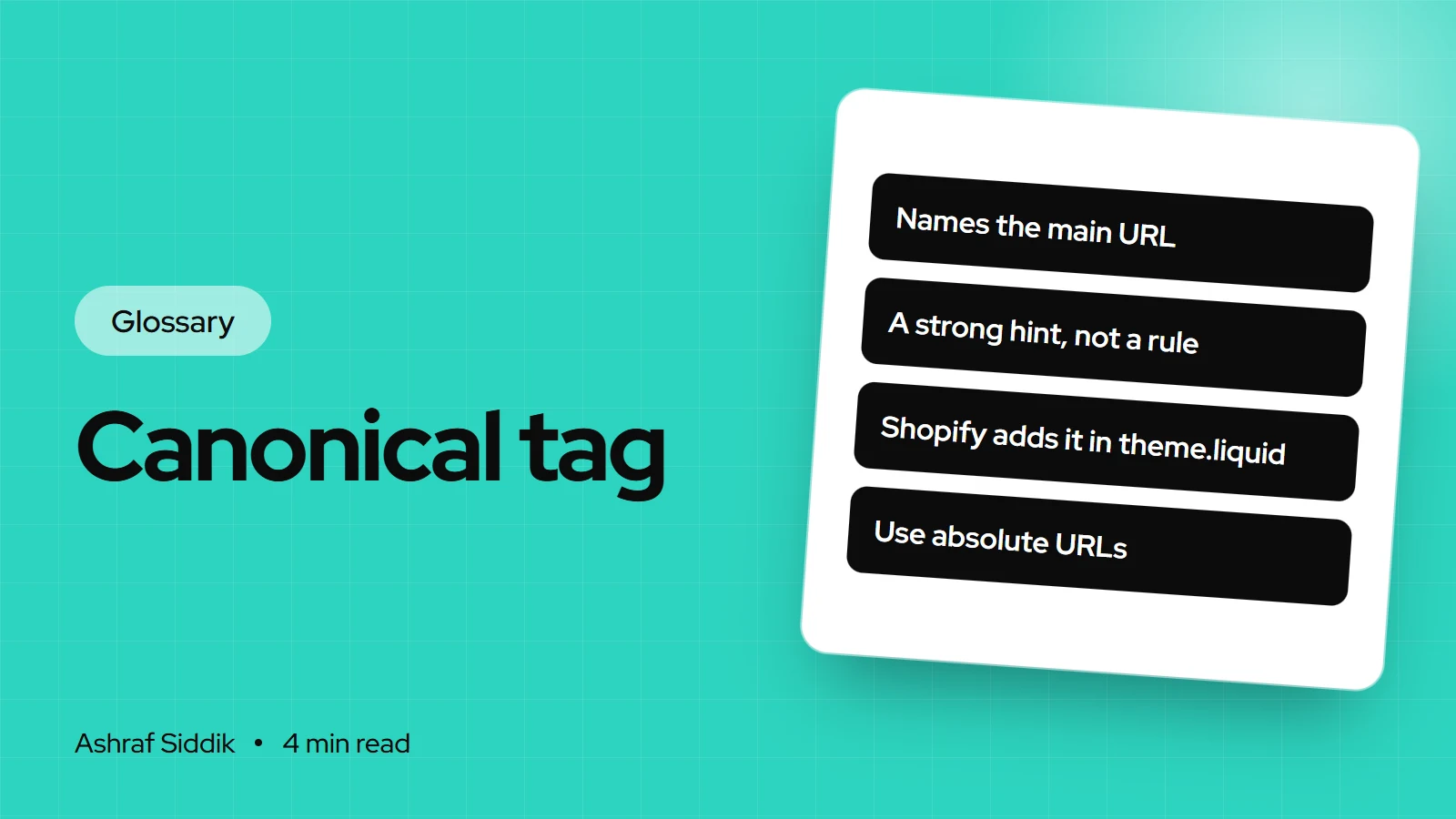
What Is a Canonical Tag? How Shopify Handles Canonicals
A canonical tag tells search engines which URL is the main version of a page that exists at several addresses. Here is how it works, how Shopify sets it for you, and the cases where it goes wrong.
-
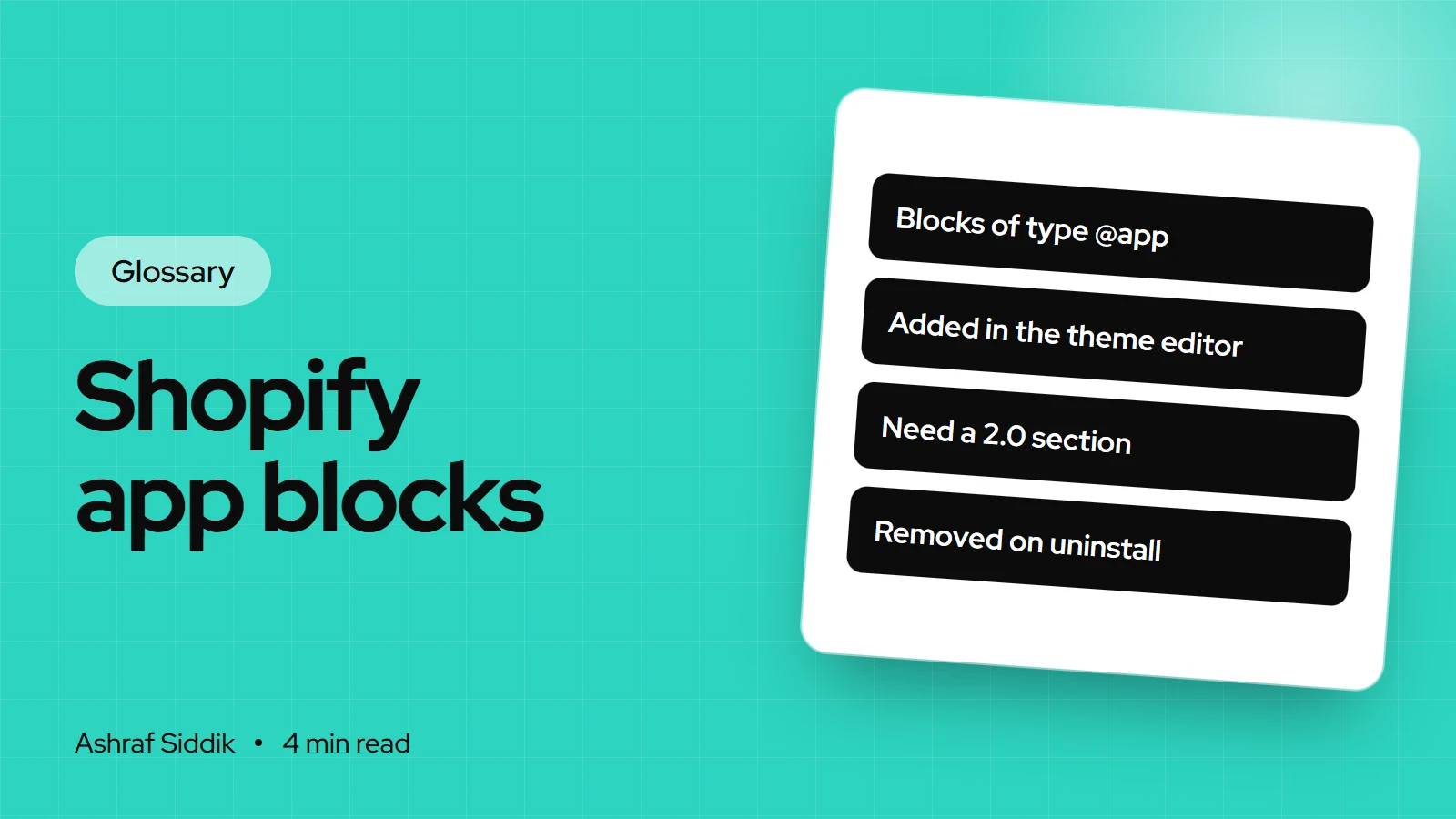
What Are Shopify App Blocks?
App blocks are how Shopify apps put their features inside your theme's sections. Here is how they work, how to add one, and why an app sometimes doesn't show up.
-
What Is Shop Pay? How It Works and What It Does for Conversions
Shop Pay is the one-tap checkout built into Shopify Payments. Here is how it works, what Shopify claims for conversion, and how to switch it on for your store.
-
What Is Sales Tax Nexus? Physical and Economic Nexus for Shopify Stores
Sales tax nexus decides which US states you have to collect sales tax for. Here is how physical and economic nexus work, the main state thresholds, and how Shopify helps you track them.
-
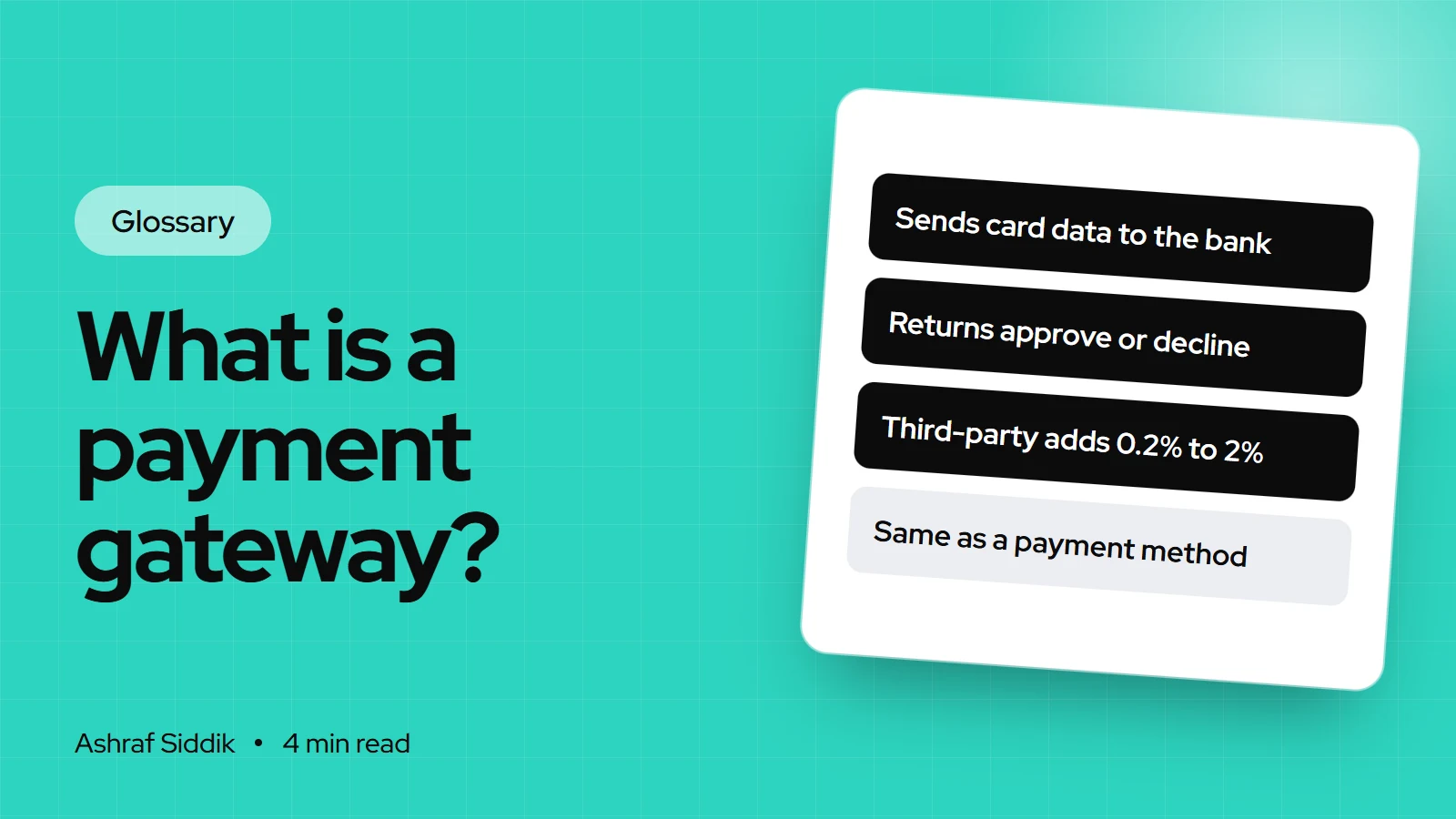
What Is a Payment Gateway? Shopify Payments vs Third-Party Gateways
A payment gateway is what gets a card payment approved between your checkout and the bank. Here is how it works, and what choosing Shopify Payments or a third-party gateway means for your fees.
-
What Is the EU OSS VAT Scheme? One-Stop Shop for Shopify Sellers
OSS lets an EU store report the VAT it owes in other EU countries through one return at home. Here is how the scheme works, when you need it, and how to set it up in Shopify.
-
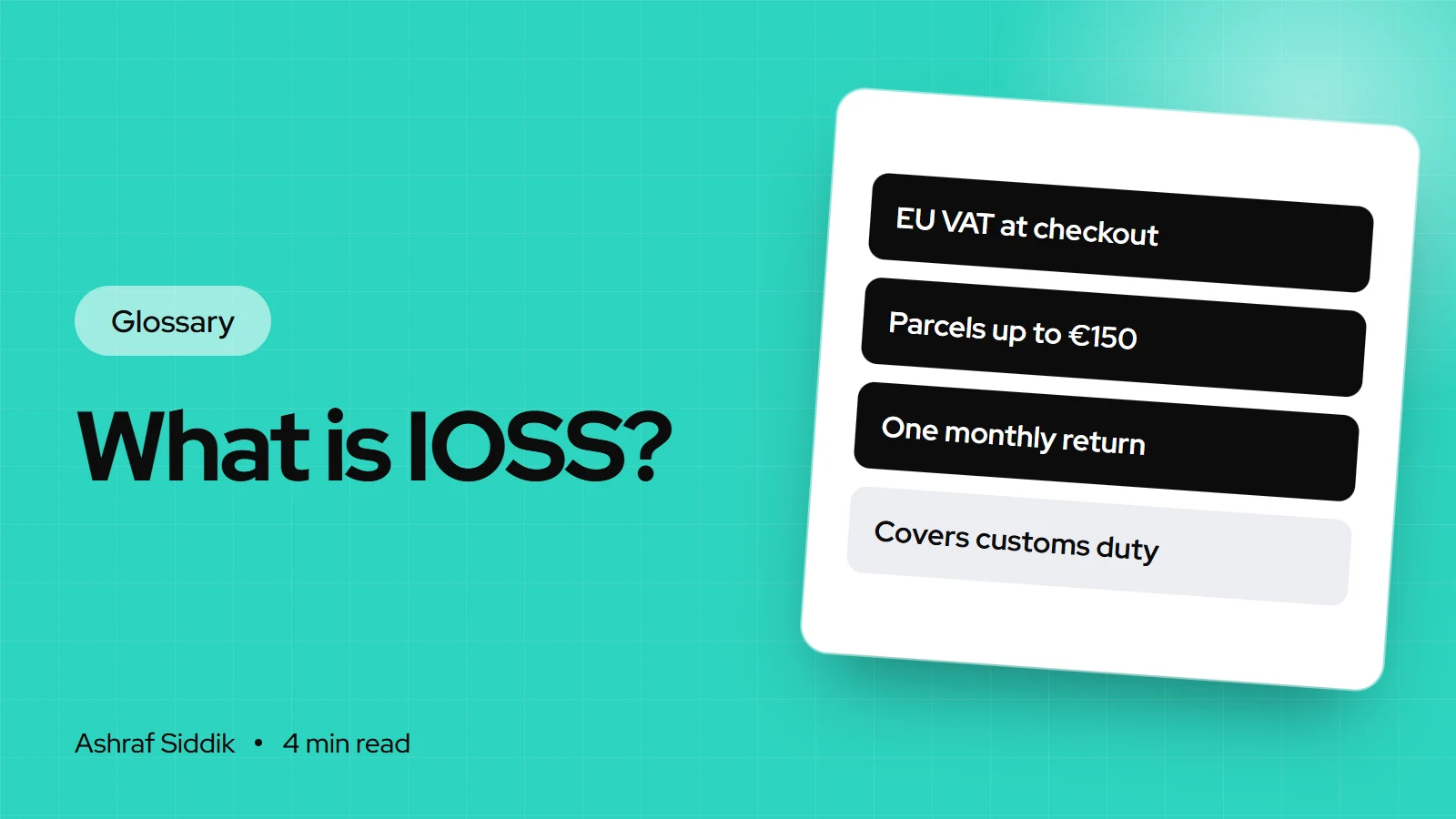
What Is IOSS? The EU Import One-Stop Shop for Shopify Sellers
IOSS lets sellers outside the EU charge EU VAT at checkout on parcels up to €150. Here is how it works, what it doesn't cover, and how to set it up in Shopify.
-
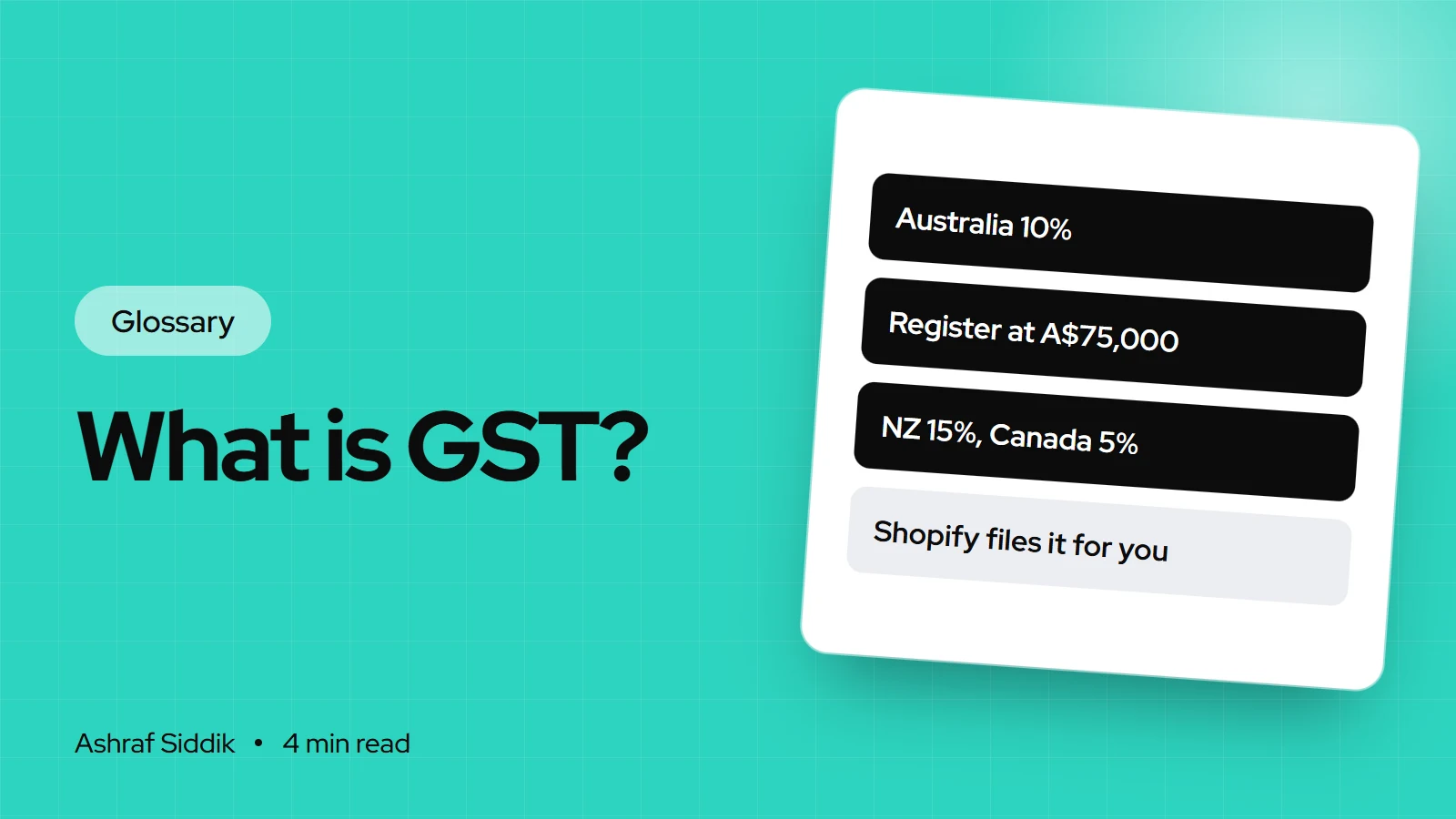
What Is GST? How Goods and Services Tax Works for Shopify Sellers
GST is the tax added to most sales in Australia, New Zealand and Canada. Here is how it works, when you have to register, and how to charge it correctly on a Shopify store.
-
What Are Duties and Import Taxes? A Guide for Shopify Sellers
Import duties and taxes are what customs charges before a parcel is delivered. Here is how they work, what changed in the EU and US, and how to charge them at checkout on Shopify.
-
What Is a Chargeback? How Shopify Merchants Prevent and Win Disputes
A chargeback is a card payment the bank takes back after a dispute, plus a fee. Here is how the process works on Shopify, what it costs, and how to stop them before they start.
-
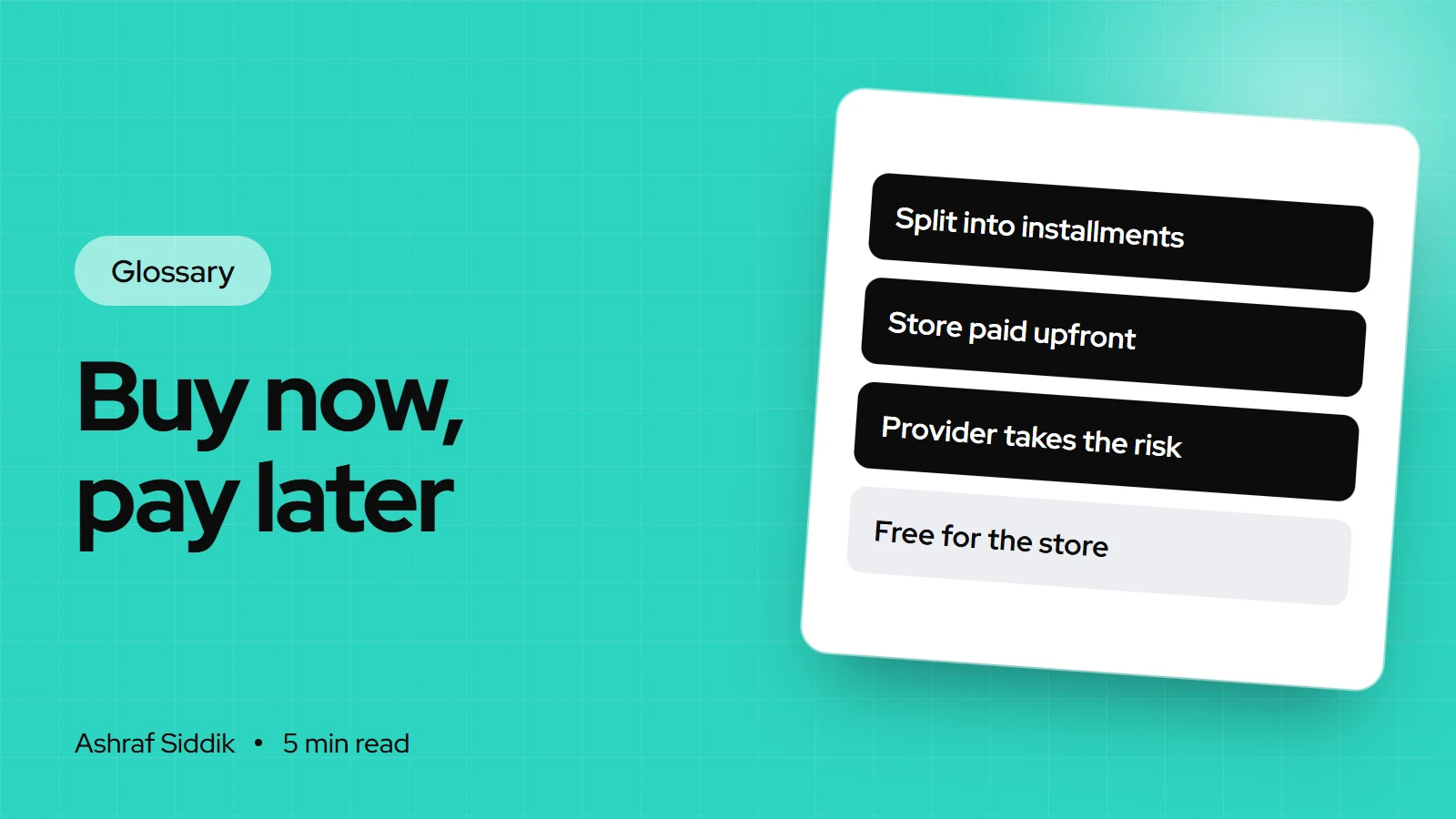
What Is Buy Now, Pay Later (BNPL)? Should Your Shopify Store Offer It?
Buy now, pay later lets shoppers split an order into installments while you get paid upfront. Here is how it works, what it costs a store, and when it is worth adding to your Shopify checkout.
-
What Is a Heatmap? How Shopify Stores Use Click and Scroll Maps to Lift Conversions
A website heatmap shows where visitors click, how far they scroll and what they ignore, using color. Here is how to read one and how to set it up on a Shopify store.
-
What Is Conversion Rate Optimization (CRO)? A Plain-English Guide for Shopify Stores
Conversion rate optimization is the practice of getting more of your existing visitors to buy. Here is how the process works, the math behind it and where to start on a Shopify store.
-
What Is Checkout (and How Shopify Checkout Works)?
Checkout is the last stretch between a full cart and a paid order. Here is how Shopify's checkout works, what each plan lets you change, and how to measure it.
-
What Is Bounce Rate? What's Normal for a Shopify Store (and When to Worry)
Bounce rate measures visits that leave without doing anything more. Shopify and GA4 define it differently, so here is what each one means and when a high number is worth fixing.
-
What Is an Abandoned Cart? Why Shoppers Leave and How Shopify Recovers Them
An abandoned cart is a cart a shopper filled and left without buying. Here is how to measure it, how Shopify tells carts and checkouts apart, and how to recover them.
-
What Is A/B Testing? How to Run Split Tests on a Shopify Store
A/B testing shows two versions of a page to different visitors and measures which one performs better. Here is how it works, the math behind a result, and how to run one on Shopify.
-
What Is Revenue per Visitor (RPV)?
Revenue per visitor shows what each visit to your store is worth. Here is the formula, how to work it out from Shopify, and why I judge most tests on it.
-
What Is the LTV:CAC Ratio (and What's a Good One)?
The LTV:CAC ratio compares what a customer is worth with what it cost to win them. Here is the formula, a worked example and how to read the result for a Shopify store.
-
What Is Gross Margin? How to Calculate It for Your Shopify Products
Gross margin tells you how much of every sale is left after paying for the product itself. Here is the formula, a worked example and where to find it in Shopify.
-
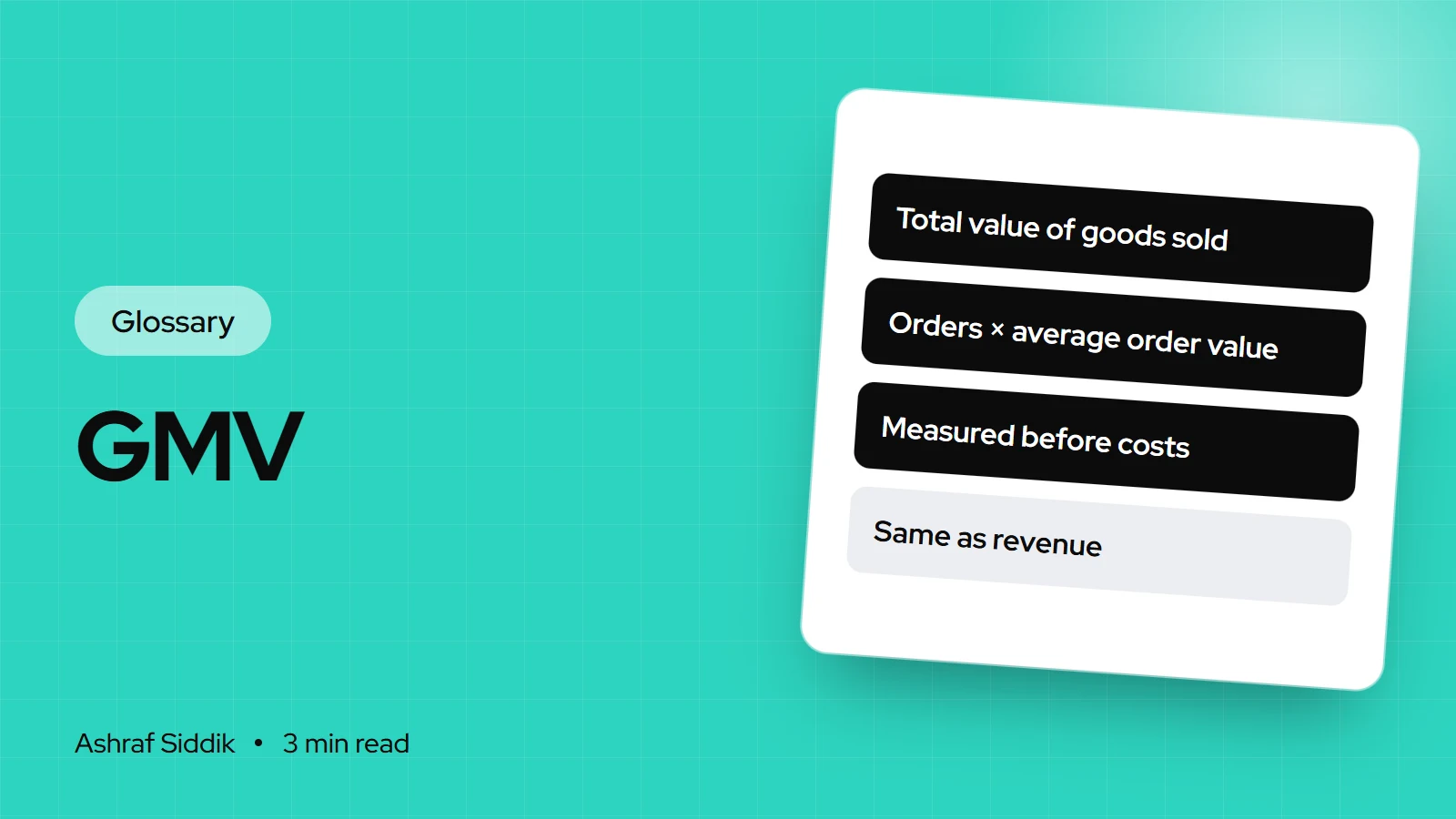
What Is GMV (Gross Merchandise Value)?
GMV is the total value of goods sold through a store or platform before any costs come out. Here is how it's calculated, how it differs from revenue, and where Shopify shows it.
-
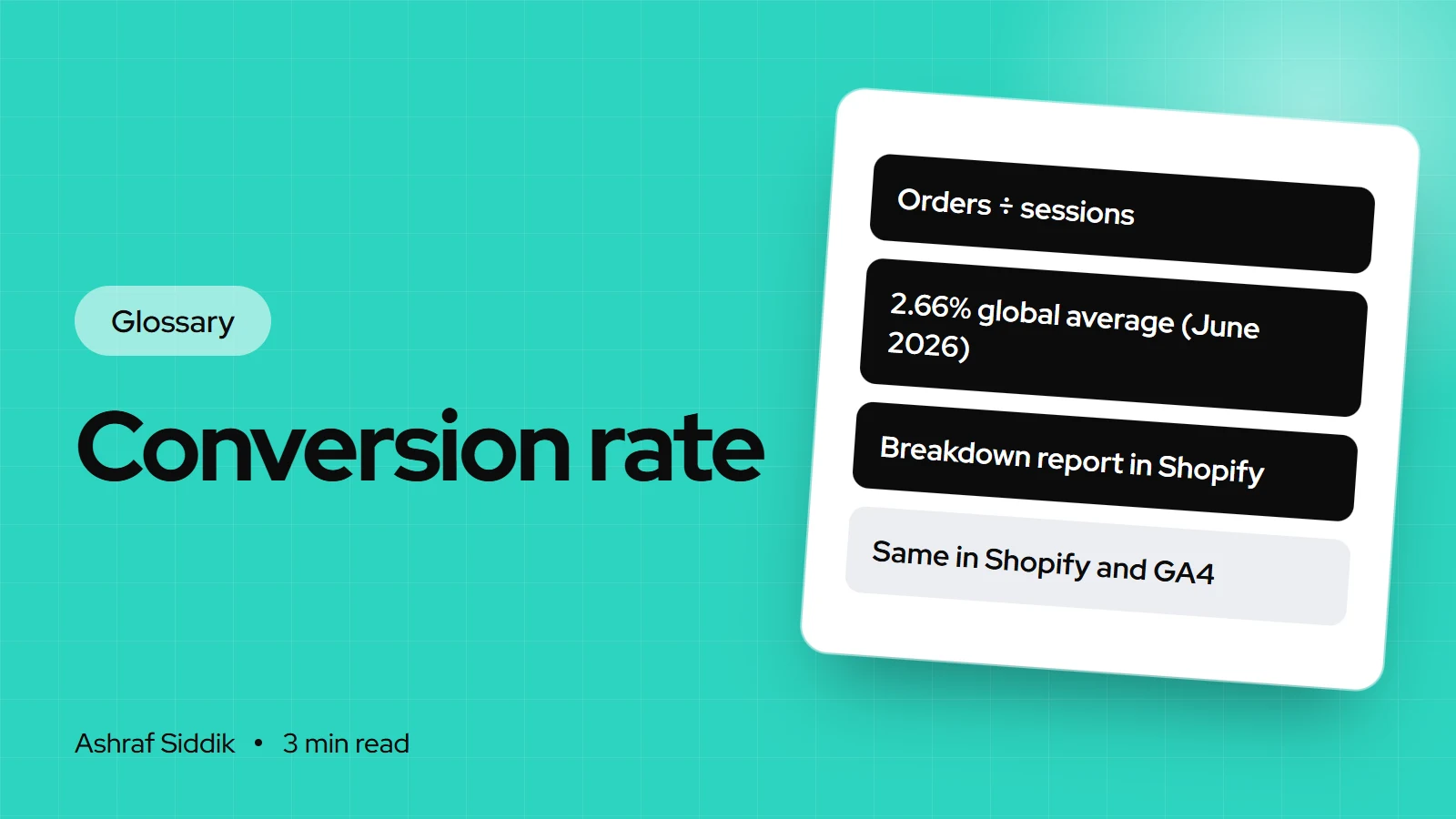
What Is Conversion Rate (and What's a Good One)?
Conversion rate is the share of store visits that end in a purchase. Here is how Shopify calculates it, what the averages look like and how to read your own number.
-
What Is Contribution Margin? The Profit Metric Shopify Brands Should Track
Contribution margin shows what each order really leaves you after every cost that grows with sales. Here is the formula, the ratio and a worked Shopify example.
-
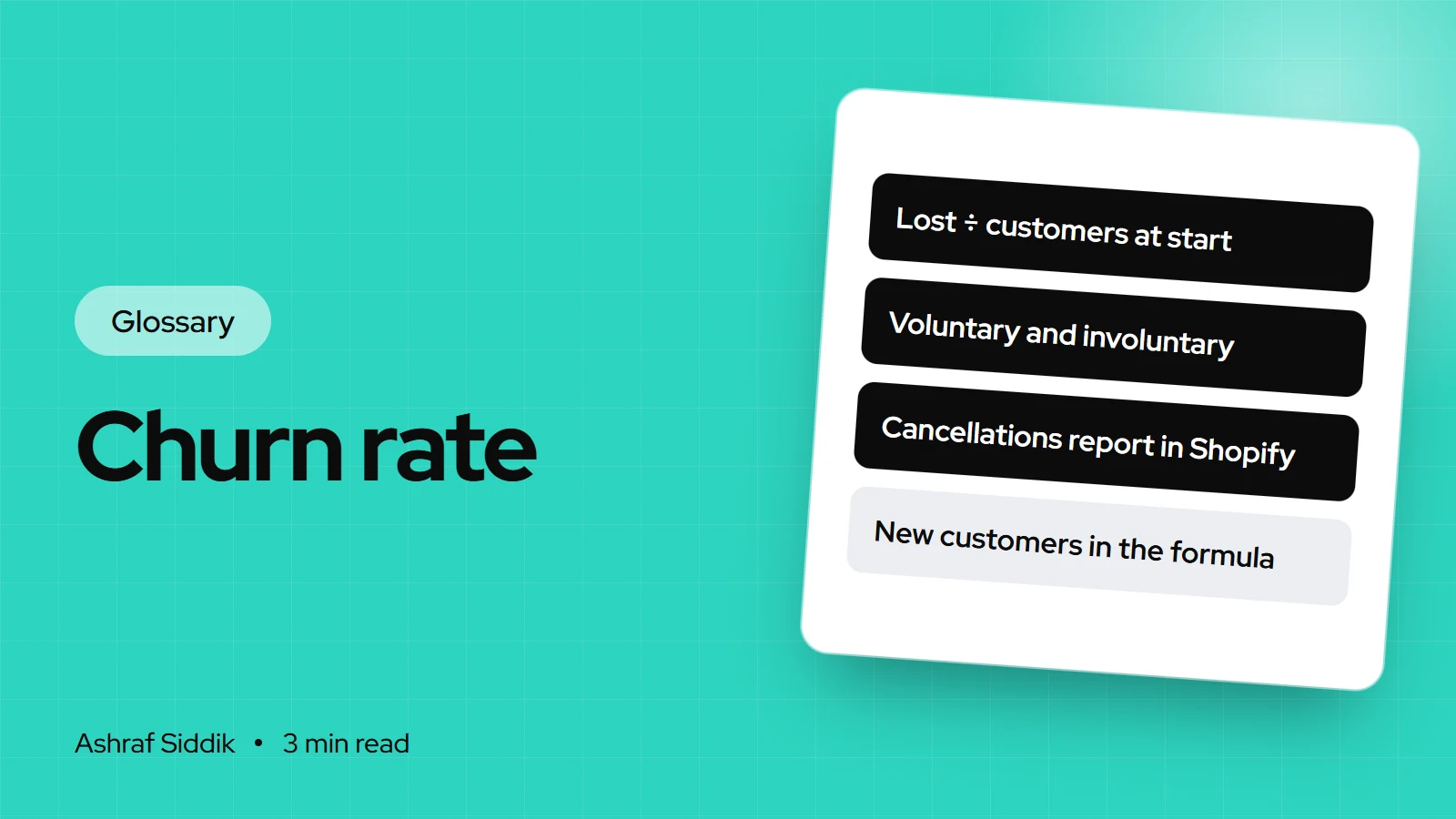
What Is Churn Rate? How Shopify Subscription Brands Measure and Reduce It
Churn rate is the share of customers you lose over a period. Here is how to calculate it, how it works for Shopify subscriptions, and how to bring it down.
-
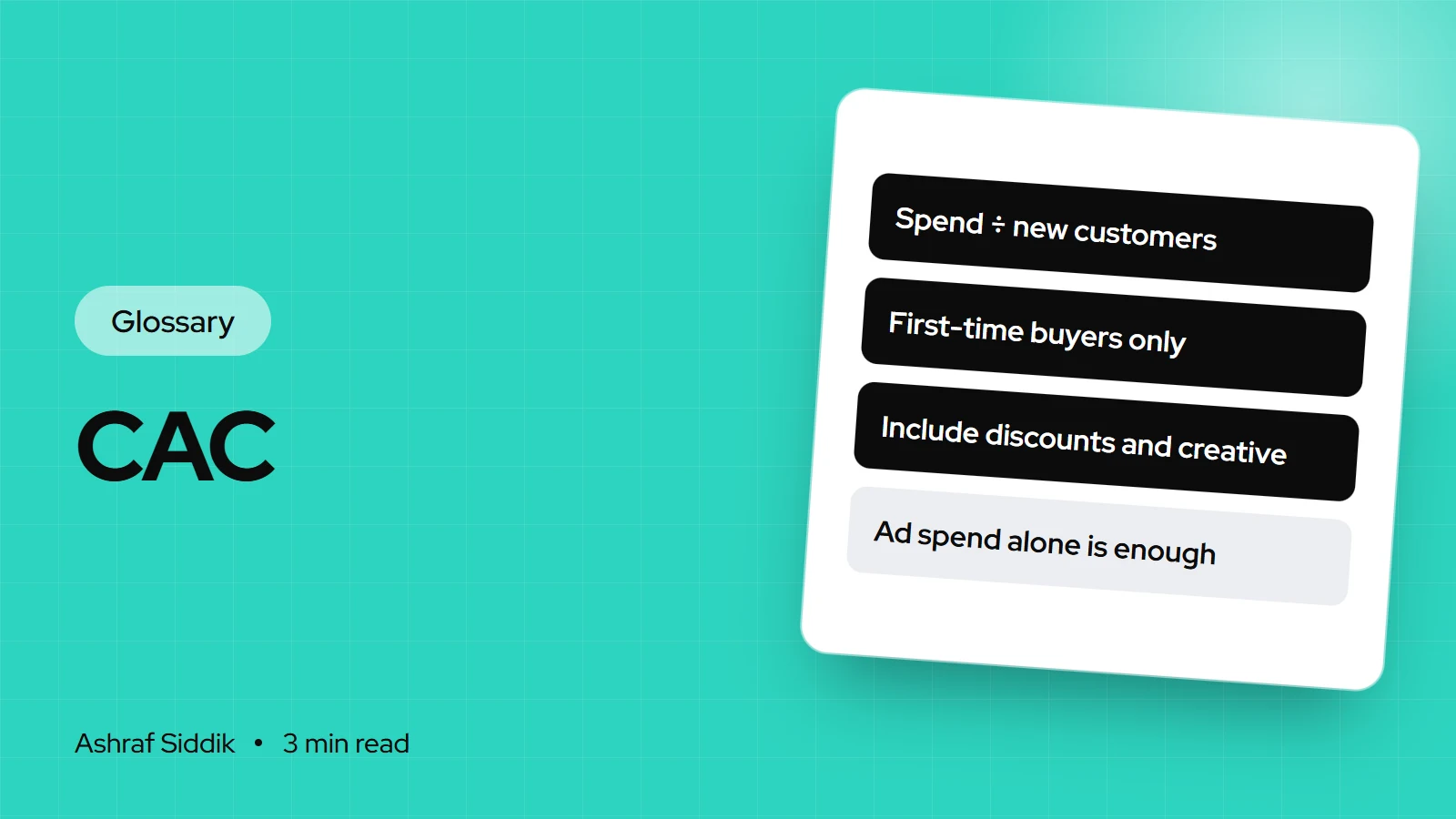
What Is CAC (Customer Acquisition Cost)? How to Calculate It for Your Shopify Store
Customer acquisition cost is what you spend, on average, to win one new customer. Here is the formula, what to include, and how to read it for a Shopify store.
-
What Is Average Order Value (AOV)? How to Calculate and Raise It on Shopify
Average order value is what a typical order is worth. Here is the formula Shopify uses, where to find it in your reports, and the changes that raise it without hurting conversion.
-
What Is a SKU? Meaning, Examples and How to Set Up SKUs in Shopify
A SKU is the code a business gives each version of a product it stocks, so stock can be counted and found without confusion. Here is what a SKU number means, how it differs from a barcode, and how to set SKUs up in Shopify.
-
What Is Shopify Markets? Selling to Several Countries From One Store
Shopify Markets is the part of your Shopify admin that lets one store give different countries or buyer groups their own currency, prices, language and domain. Here is what a market is, what you can change per market, and where Managed Markets fits.
-
What Is a Shopify Collection? Manual and Automated Collections Explained
A Shopify collection groups products onto one page, such as New in or Gifts under $50, so shoppers can browse them together. Here is how collections work, the limits to know, and how they differ from product categories.
-
What Is a Product Variant on Shopify? Options, Limits and Setup
A product variant is one buyable version of a product, such as a T-shirt in size Small and color Blue. Here is how Shopify variants and options fit together, the limits, and how to add them.
-
What Is Print on Demand? How It Works with Shopify
Print on demand lets you sell your own designs on T-shirts, mugs and posters without buying stock, because each item is printed after the order. Here is how it works with a Shopify store and what is left after costs.
-
What Is Omnichannel Retail? How Shopify Connects Your Store, POS and Marketplaces
Omnichannel retail means your online store, physical shop and other sales channels work as one, so a customer can browse in one place and buy or collect in another. Here is what it means and how Shopify supports it.
-
What Is a GTIN? Barcodes, UPCs and EANs Explained for Shopify Sellers
GTIN stands for Global Trade Item Number, the product number inside a UPC or EAN barcode. Here is what a GTIN is, how it relates to UPC and EAN, how to get one, and where it goes in your Shopify store.
-
What Is DTC (Direct to Consumer)? How Shopify Brands Sell Without Middlemen
Direct to consumer means a brand sells its own products straight to the people who use them, with no wholesaler or retailer in between. Here is what DTC means in practice, where the extra margin goes, and how Shopify brands run it.
-
What Is Dropshipping? How It Works on Shopify (and Its Real Margins)
Dropshipping lets you sell products without holding stock, because the supplier ships each order straight to your customer. Here is how it works on Shopify and what the margins look like once every cost is counted.
-
What Is a 3PL? Third-Party Logistics for Shopify Brands Explained
A 3PL is an outside company that stores your stock and picks, packs and ships your orders. Here is what third-party logistics means, how 3PL fees are built, and how a 3PL plugs into a Shopify store.
-
What Is ROAS? Return on Ad Spend Explained, with the ROAS Formula
ROAS is the revenue your ads return for each $1 you spend. Here is the formula, how to work out your break-even ROAS, and why your store's conversion rate moves it more than you'd think.
-
What Is a Product Feed? Google Product Feeds Explained for Shopify Stores
A product feed is the structured list of your products that Google, Meta and other channels use to show them in ads and listings. Here is what goes in it, how Shopify sends it, and why it has to match your store.
-
What Is POAS (Profit on Ad Spend)? Formula and How It Differs from ROAS
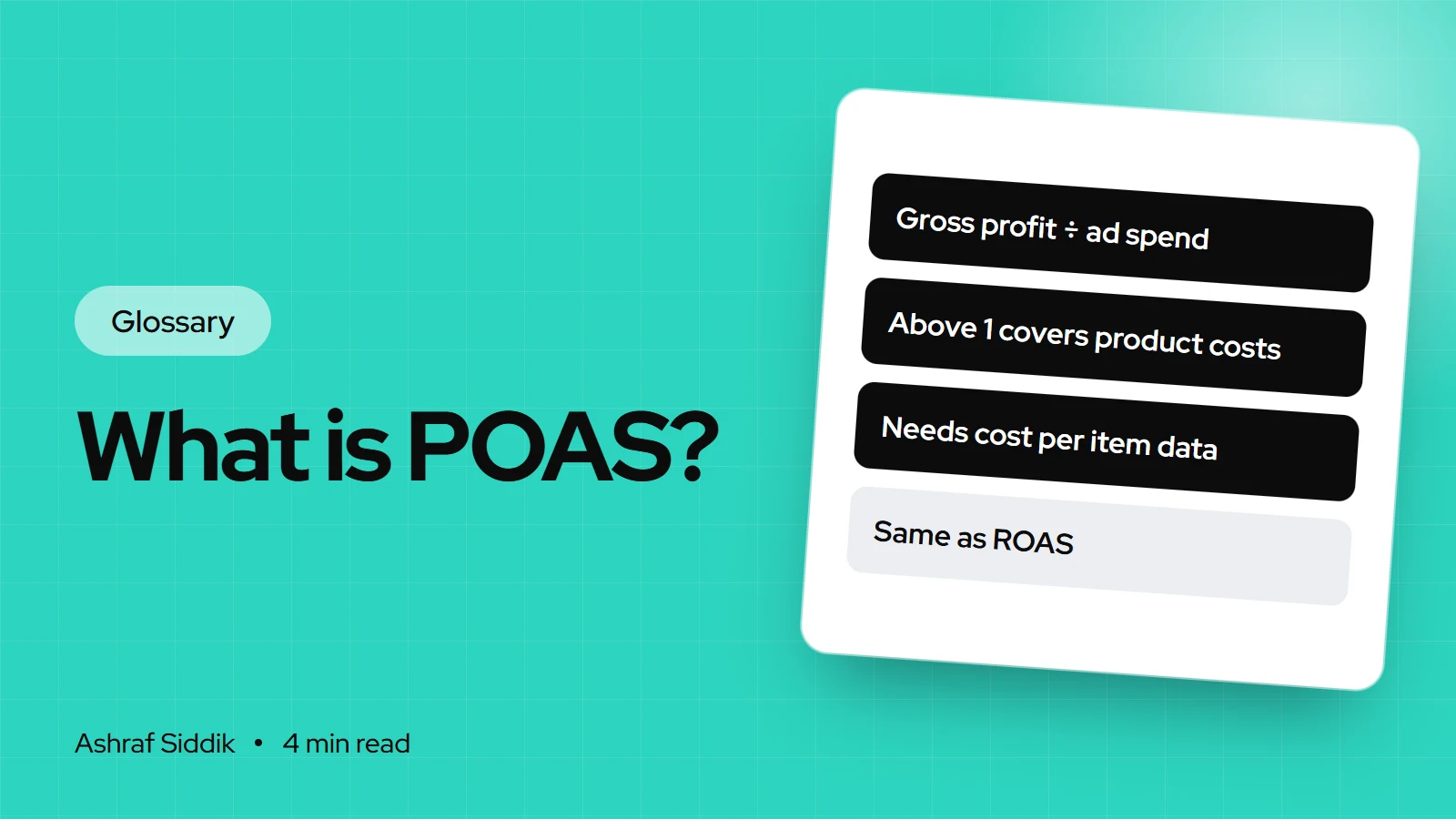
POAS measures the gross profit your ads bring in for each $1 of ad spend. Here is the formula, why it can tell a different story from ROAS, and how to get the cost data from Shopify.
-
What Is MER (Marketing Efficiency Ratio)? Formula and How to Use It
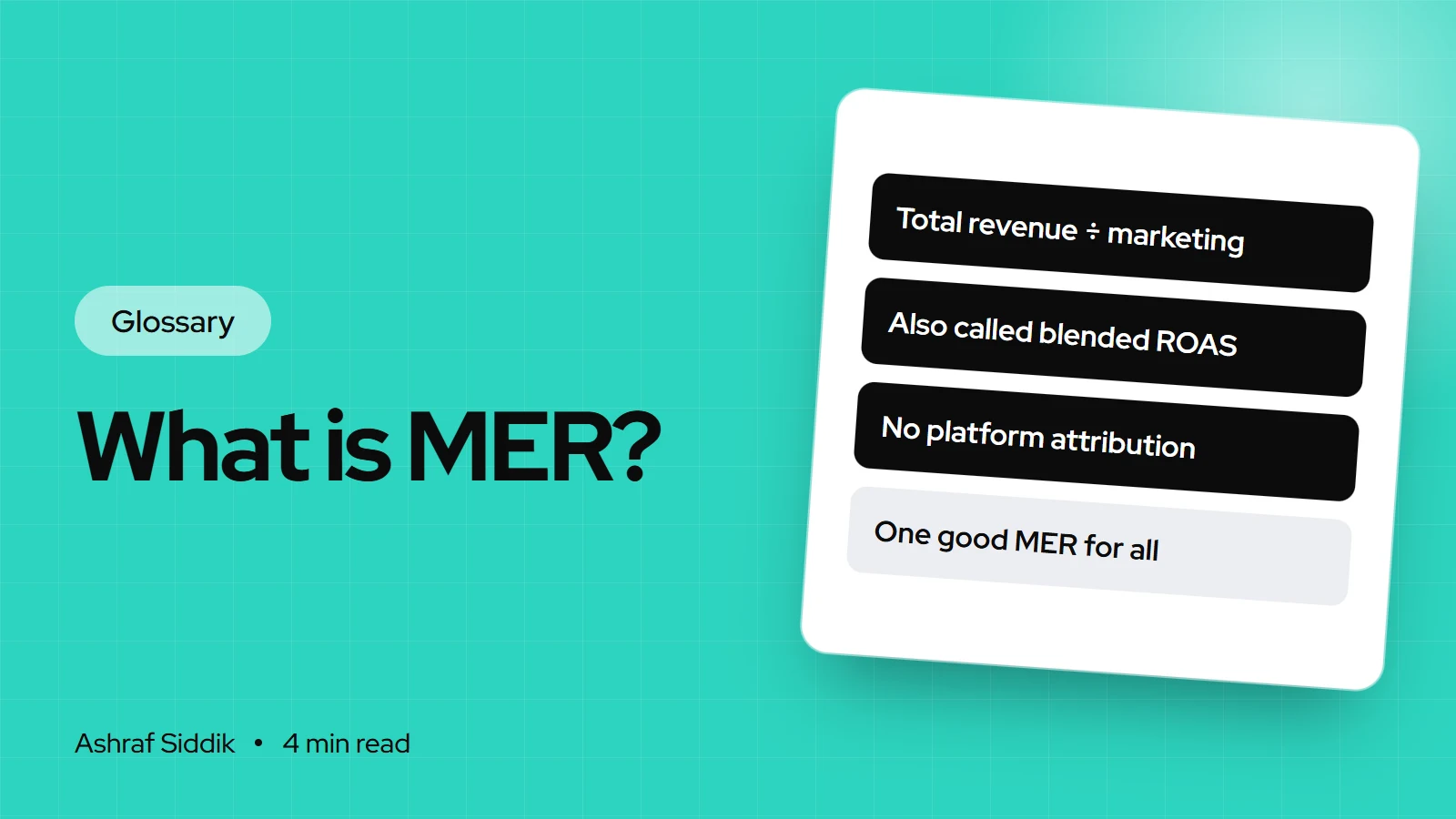
MER is your store's total revenue divided by total marketing spend. Here is how to calculate it, how to find the MER your margin needs, and why it is the reality check on ad platform numbers.
-
What Is a Lookalike Audience? Meta Lookalikes Explained for Shopify Stores
A lookalike audience is a group of new people Meta finds because they resemble a list you give it, such as your customers. Here is how it works, the rules, and what your store needs to do for that traffic.
-
What Is Headless Commerce? How It Works and When Shopify Brands Need It
Headless commerce means building your storefront separately from the commerce engine behind it. Here is how it works on Shopify, what it costs you, and when a theme is still the better choice.
-
What Is Customer Lifetime Value (CLV)? Definition, Formula and Shopify Examples
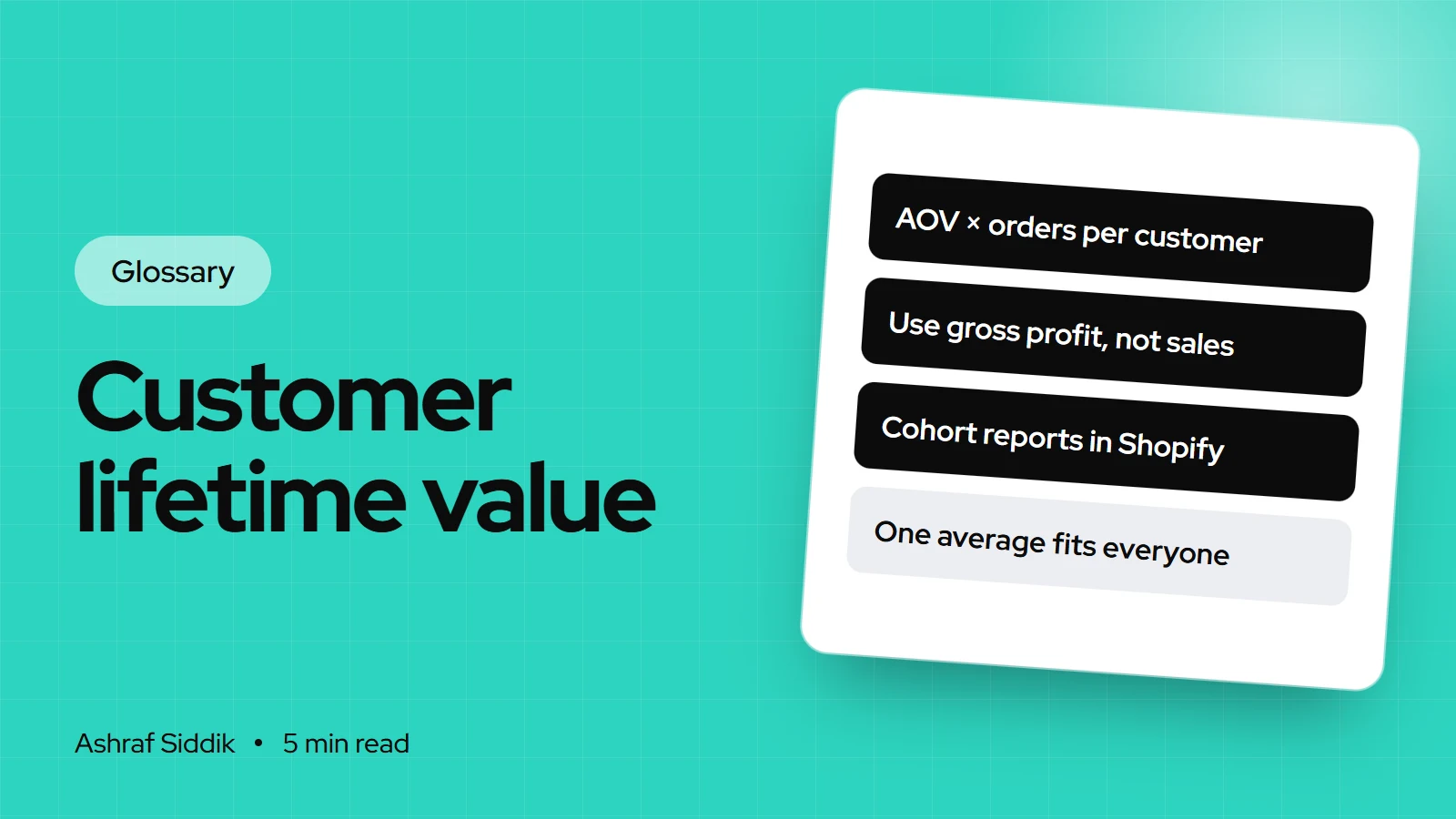
Customer lifetime value is what a customer is worth to your store over every order they place. Here is the formula, a worked example, and where Shopify shows the numbers.
-
What Is CTR (Click-Through Rate)? Formula and Benchmarks for Shopify Ads and Search
Click-through rate is the share of people who see your ad or listing and click it. Here is the formula, what a good CTR means, and how it connects to your store's sales.
-
What Is CPM? Cost per Thousand Impressions Explained for Shopify Advertisers
CPM is the price of 1,000 ad impressions. Here is the formula, a worked example, and what it means for the Shopify store your ads send people to.
-
What Is CPC (Cost per Click)? What Shopify Brands Should Expect to Pay
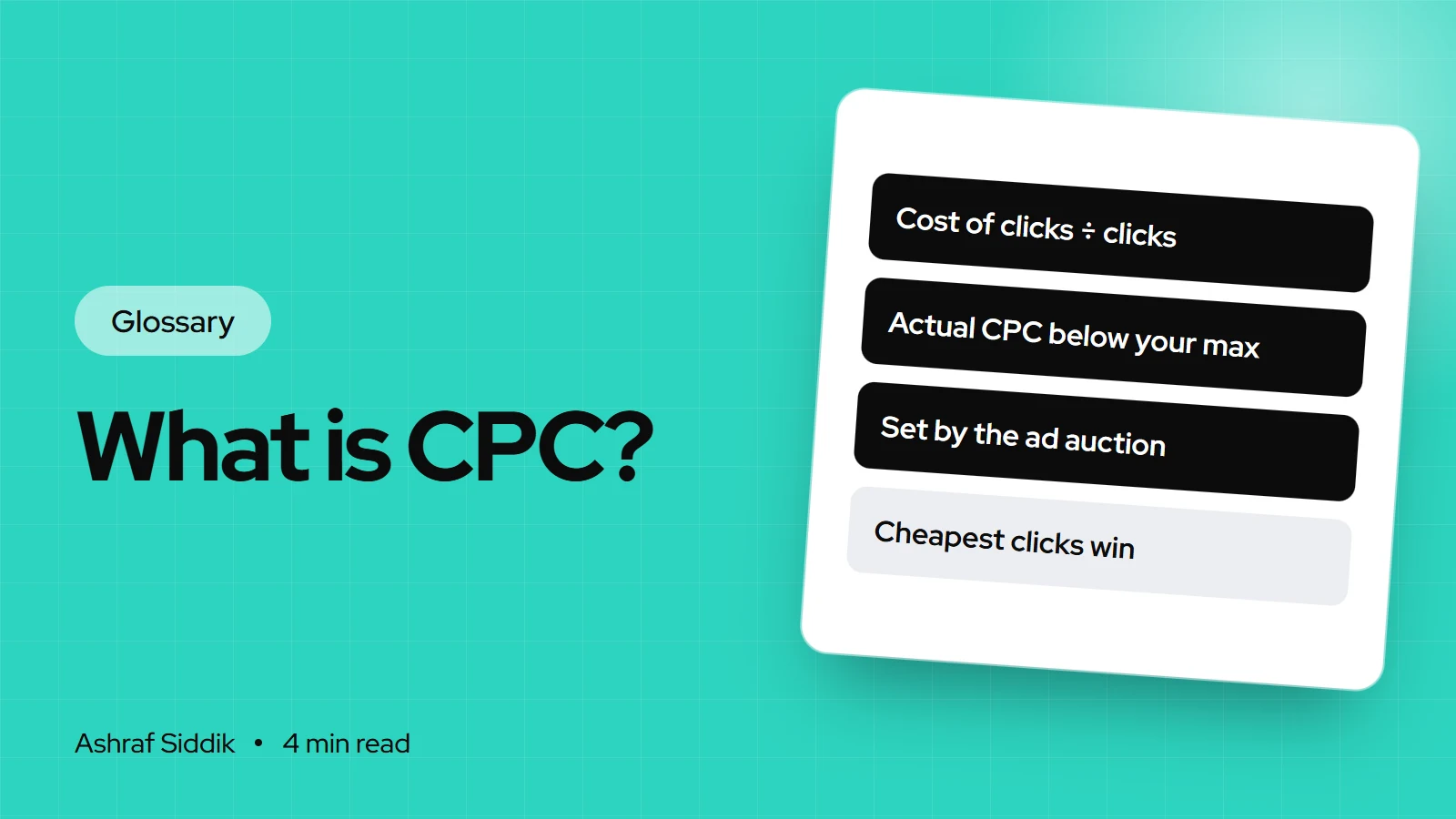
Cost per click is what you pay each time someone clicks your ad. Here is how it is calculated, what decides it, and how to work out the most your store can afford to pay.
-
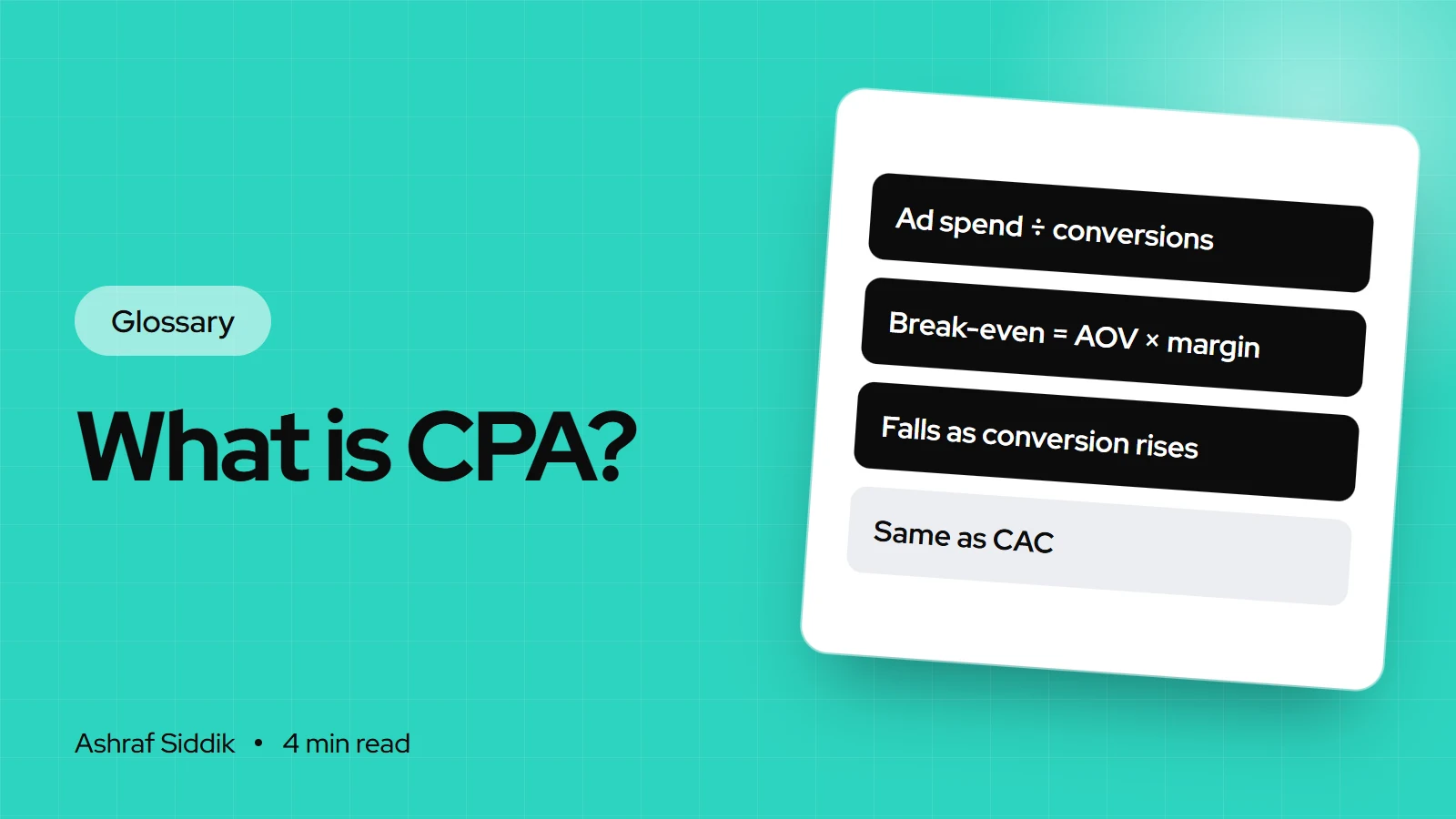
What Is CPA (Cost per Acquisition)? How to Calculate and Lower It
Cost per acquisition is what you pay in ads for each conversion, usually an order. Here is the formula, how to set a target CPA you can afford, and the store changes that bring it down.
-
What Is an Attribution Window? Meta, Google Ads and GA4 Explained
An attribution window is how long after a click or view a sale can still be credited to an ad. Here are the defaults on Meta, Google Ads and GA4, and why your platforms report more sales than Shopify.