Shopify glossaryGlossary4 min read
What Is a Chargeback? How Shopify Merchants Prevent and Win Disputes
A chargeback is a card payment the bank takes back after a dispute, plus a fee. Here is how the process works on Shopify, what it costs, and how to stop them before they start.

Key takeaways
- A chargeback is a card payment reversed by the cardholder's bank after a dispute. The bank takes the money back from you straight away and adds a fee.
- With Shopify Payments the fee is $15 in the US, £10 in the UK, €15 in the Netherlands and A$25 in Australia. It's returned if you win.
- You usually have 7 to 21 days to send evidence, and the card issuer can take up to 75 days to decide. Shopify doesn't make the decision.
- An inquiry is an early warning: nothing is taken yet, so it's your chance to settle the issue before it becomes a chargeback.
- Who it is for
- Stores facing card disputes
- Time needed
- 4 minutes to read
- What you need
- Access to your Shopify admin
A chargeback is the reversal of a card payment that the cardholder's bank forces through after the cardholder disputes the charge. The bank takes the money back from the merchant straight away, usually adds a fee, and then decides the dispute based on evidence from both sides.
The cardholder might be your customer, or someone whose card was used without permission. Either way, the store pays first and argues later. Fees and timings below are from Shopify's Help Center, as checked on 7 November 2026.
How a chargeback works
- The cardholder disputes the charge with their bank, giving a reason such as fraud, item not received or not as described.
- The bank opens a chargeback. The disputed amount and a chargeback fee are taken from your account. With Shopify Payments, they come out of your next payout.
- Shopify notifies you and shows the response deadline.
- You submit evidence before that deadline, usually 7 to 21 days away. Shopify submits what it already holds automatically on the due date, even if you add nothing.
- The card issuer decides. This can take up to 75 days after you submit. You win, partly win or lose.
With an inquiry, the bank asks questions first and takes nothing yet. Inquiries usually take 65 to 75 days to review. Some stores are in a card network program that refunds customers before a formal chargeback, and those cases have no evidence window.
What a chargeback really costs
Say a US customer disputes a $120 order as fraud. The product cost you $40 and shipping $8.
A lost $120 chargeback
- Taken from your payout$135The $120 order plus the $15 fee.
- Loss versus no sale$63$15 fee, $40 product and $8 shipping, as the goods are gone.
That is why prevention beats winning: at a 30% margin, each $120 order earns $36, so one lost dispute wipes out the profit on about two good orders.
Chargeback fees by country
| Store country | Chargeback fee | If you win |
|---|---|---|
| United States | $15 | Fee returned |
| United Kingdom | £10 | Fee returned |
| Netherlands | €15 | Fee returned |
| Australia | A$25 | Fee returned |
| Canada | C$15 or $15 | Fee returned |
Most other EU countries also charge €15 through Shopify Payments. Third-party gateways set their own fees.
Chargebacks in Shopify
- Notifications and deadlines. Shopify tells you when a chargeback or inquiry opens and shows the issuer's claim, which states the reason. Your evidence has to answer that exact reason.
- Automatic evidence. On the due date Shopify sends what's already in your admin, such as addresses, tracking and refund records. Add carrier screenshots and customer emails yourself before then.
- Chargeback rate. You can view chargeback rate metrics in the Analytics section of your admin.
- Shopify Protect. This free feature helps protect eligible Shop Pay orders against fraudulent and unrecognized chargebacks.
- High-risk orders. Review orders flagged by Shopify's fraud analysis and cancel the suspicious ones before you ship.
My guide to preventing fraud and chargebacks on Shopify covers the settings I use on client stores.
Common misconceptions
- "A chargeback is just a refund." A refund is your choice. A chargeback is forced by the bank, costs a fee, and counts against your chargeback rate.
- "Shopify decides who wins." The card issuer reviews the evidence and decides. Shopify passes your case on.
- "If I ignore it, Shopify will handle it." The automatic submission only uses what's in your admin. It's rarely enough on its own.
- "Every chargeback is fraud." Many come from real customers who didn't recognize the charge or couldn't reach you. Clear billing names and fast replies prevent those.
Related terms
- Payment gateway: your gateway sets the chargeback fee and the dispute process.
- Shop Pay: eligible Shop Pay orders can be covered by Shopify Protect.
- Buy now, pay later: pay-later disputes go through the provider instead of the card network.
- 3D Secure: the extra card check that helps prove the real cardholder approved a payment.
What to do next
- Respond to any open dispute with evidence that matches its reason, before the deadline.
- Check your payouts. My guide to Shopify payouts and reconciliation shows where deductions appear.
- Fix the cause. Use tracked shipping, clear product pages and a returns policy customers see before they pay.
- Ask for a review. If disputes keep coming, I'll look at your checkout and order flow for free.
Free tools
Check your own store
Free, no sign-up. Each one runs a part of this guide for you.
Frequently asked questions
What is a chargeback?
A chargeback is a card payment reversed by the cardholder's bank after the cardholder disputes it. The bank takes the money from the merchant right away, adds a fee, and then decides the case on the evidence.
What is a chargeback fee on Shopify?
With Shopify Payments the fee is $15 in the US, £10 in the UK, €15 in the Netherlands and most of the EU, and A$25 in Australia. If you win the chargeback, the fee is returned to you.
How long do I have to respond to a chargeback?
Usually 7 to 21 days, and the exact deadline is shown on the dispute. Shopify submits the evidence it already holds on the due date, so add your own before then.
How long does a chargeback take?
After you submit evidence, the card issuer can take up to 75 days to decide. Inquiries usually take 65 to 75 days to review.
What is the difference between a chargeback and an inquiry?
In a chargeback, the bank takes the disputed amount and a fee immediately. In an inquiry, it asks for information first and takes nothing yet, which gives you a chance to resolve the issue.
Sources
- Chargebacks and inquiries, Shopify Help Center
- Responding to chargebacks and inquiries, Shopify Help Center
- Shopify Protect, Shopify Help Center
Related services and work

I'm a Shopify developer and CRO specialist. I have built and improved Shopify stores since 2018, completed more than 1,000 projects, and hold a 4.96 average rating across 719 client reviews.
More guides
-
How to Prevent Fraud and Chargebacks on Shopify
Every Shopify chargeback costs you the product, the payment and a fee, and it stays on your record even if you win. These are the settings, checks and response steps that stop most of them.
-
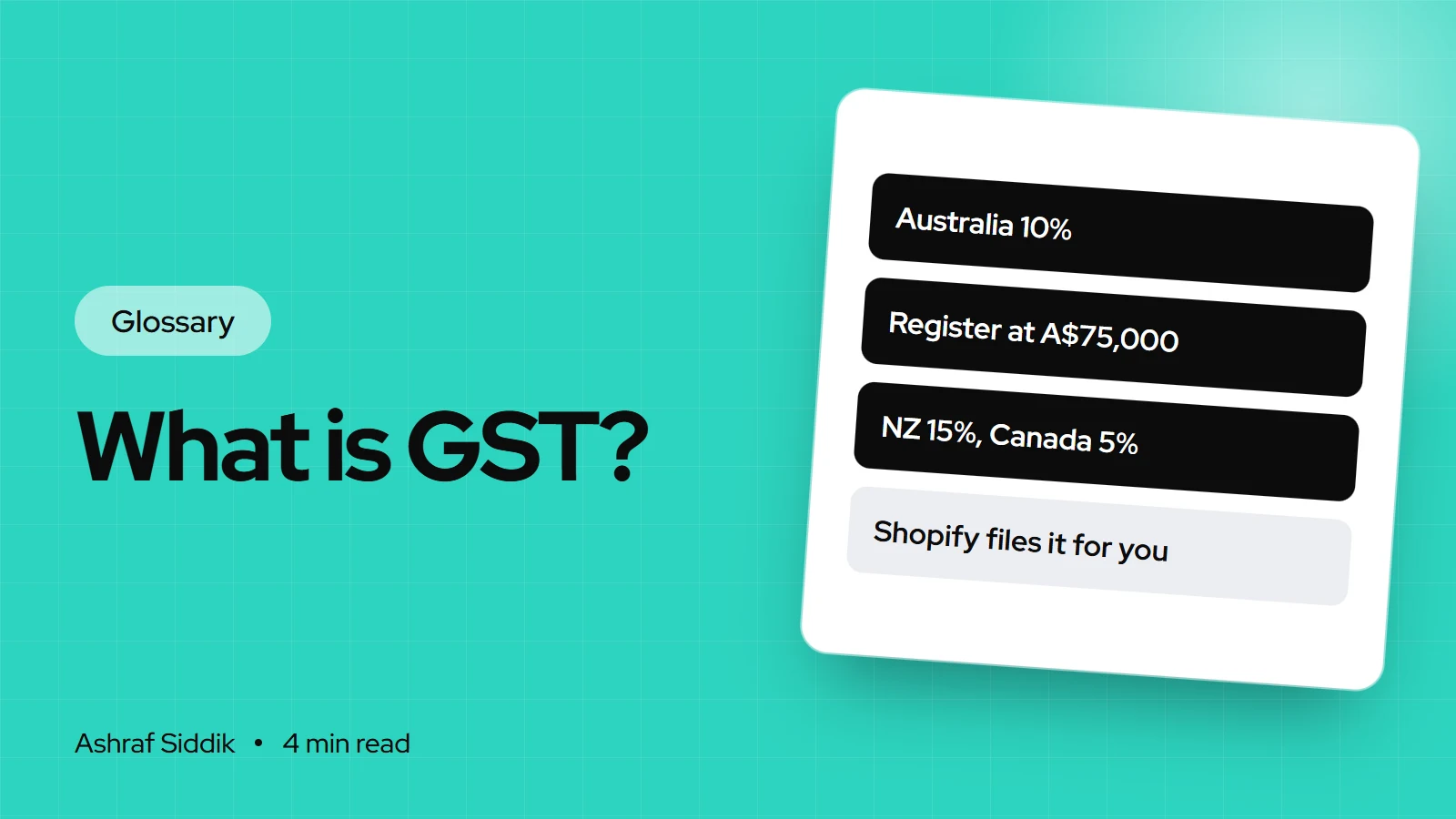
What Is GST? How Goods and Services Tax Works for Shopify Sellers
GST is the tax added to most sales in Australia, New Zealand and Canada. Here is how it works, when you have to register, and how to charge it correctly on a Shopify store.
-
What Is Sales Tax Nexus? Physical and Economic Nexus for Shopify Stores
Sales tax nexus decides which US states you have to collect sales tax for. Here is how physical and economic nexus work, the main state thresholds, and how Shopify helps you track them.
-
What Are Duties and Import Taxes? A Guide for Shopify Sellers
Import duties and taxes are what customs charges before a parcel is delivered. Here is how they work, what changed in the EU and US, and how to charge them at checkout on Shopify.