Shopify questionAnswer4 min read
Is Shop Pay Safe? What Happens to Your Card Details
Shop Pay is Shopify's own one-tap checkout. Here is how it protects your card and address, where the real risks are, and what to check before you pay.
Key takeaways
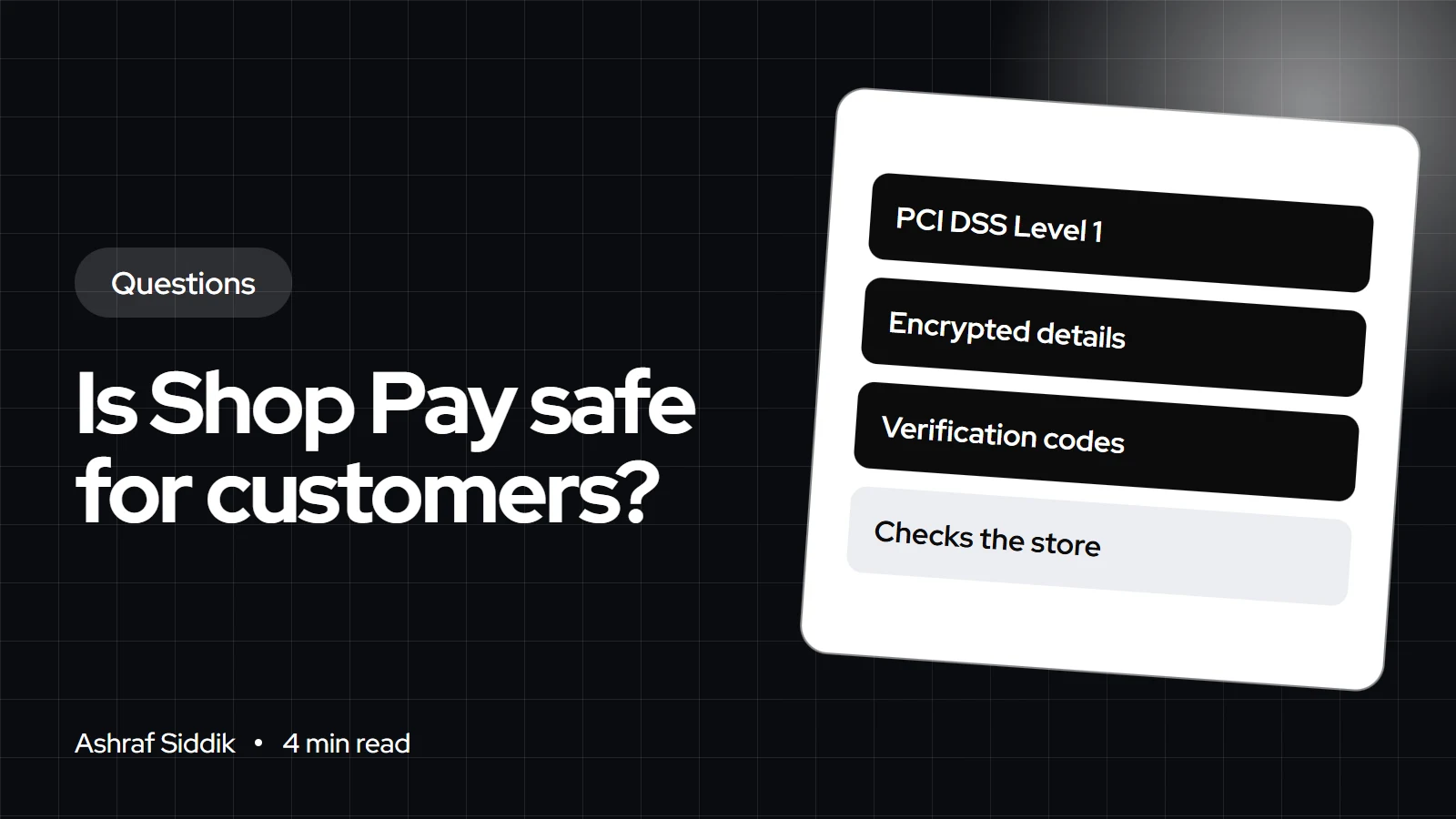
- Shop Pay is Shopify's own saved-checkout wallet, and Shopify states that it is certified Level 1 PCI DSS compliant, the top tier of the card industry's security standard.
- Shopify stores your card, shipping and billing details encrypted and shares them with a store only when you place an order there.
- Shop Pay sends a one-time code by SMS or email when you use a new device or browser, or choose Shop Pay at checkout.
- In the US, Shop Pay Installments are provided by Affirm's lending partners, so a pay-later plan is credit, not just a way to pay.
- Who it is for
- Shoppers deciding whether to use Shop Pay
- Time needed
- 4 minutes to read
- What you need
- Nothing, just your questions
Yes, Shop Pay is safe for most shoppers. It runs on Shopify's Level 1 PCI DSS certified platform, stores your details encrypted, and keeps your card with Shopify instead of handing it to every store you buy from. The real risks sit around it: a dishonest store, someone with access to your phone or email, or a pay-later plan you can't comfortably repay.
I build and fix Shopify checkouts for a living, so I see Shop Pay from the store side every week. The security facts below were checked on Shopify's and Shop's official pages on 7 November 2026.
How Shop Pay protects your details
When you save your details with Shop Pay, they're stored by Shopify, not by the store you're buying from. Shopify's help center says shipping and billing information sits on its PCI compliant servers and is "only shared with your store when an order is placed". Shop's help center describes the saved information as securely encrypted.
| Protection | What it does | Why it helps you |
|---|---|---|
| PCI DSS Level 1 | Shopify's card-security certification | Card handling meets the top tier of the standard |
| Encrypted storage | Saves card and addresses with Shopify | Stores don't keep a copy of your card |
| Verification code | SMS or email code on new devices | A known email address alone isn't enough |
| Shared per order | Store gets details when you buy | Browsing a store gives it nothing |
You can review your saved phone number, payment methods and delivery preferences in your Shop Pay settings, and change them at any time.
Where the real risks are
Shop Pay protects how you pay. It doesn't vouch for who you're paying. Any store on Shopify can show the Shop Pay button, including a brand-new store with no track record. These are the risks I'd actually watch:
- The store itself. Check for a real returns policy, contact details and a business address before you order. A secure payment doesn't make a poor store deliver.
- Your phone and email. The verification code goes to your phone or email, so anyone with access to those can confirm a Shop Pay purchase. Lock your phone and protect your email account.
- Code requests you didn't trigger. Never read a Shop Pay code out to anyone who calls or messages you. If a code arrives when you weren't checking out, someone may be trying your email.
- Pay-later plans. Installments are easy to start. Treat them like any other credit.
Shop Pay Installments: safe, but it's credit
Shopify's Shop Pay page says Installments "are provided by Affirm's lending partners". That means a plan is an agreement with a lender, with its own terms, possible checks and repayment schedule. The payment flow is as secure as the rest of Shop Pay. The risk is the debt, not the technology. Read the plan summary before you confirm, and only split a purchase you could pay for today.
By country
- US: Installments come from Affirm's lending partners, and Shopify says eligible US stores can accept health savings account (HSA) and flexible spending account (FSA) payments through Shop Pay for qualifying products.
- UK: Shop Pay works on UK Shopify stores as a fast checkout. Pay-later at a UK checkout often comes from a separate provider such as Clearpay or Klarna, each with its own terms. My Klarna vs Clearpay comparison explains the difference.
- EU and the Netherlands: Shop Pay sits next to local methods such as iDEAL. Your bank may also ask for its own approval step on card payments.
- Australia: Afterpay is a common separate pay-later option on Australian stores. The Shop Pay security model is the same.
If you run a Shopify store
Shop Pay is included with Shopify Payments and charged at your normal Shopify Payments rates. Shopify also offers Shopify Protect for free, which helps protect eligible orders against fraudulent and unrecognized chargebacks. If you haven't turned on the fast checkout buttons yet, my guide to enabling Apple Pay, Google Pay and Shop Pay walks through the settings. Customers trust a checkout more when the rest of the store looks credible too, which is what my guide to building trust in a new store covers.
What to do next
- Check the store. Look for a returns policy, contact details and a real business behind it.
- Protect your phone and email. They're the keys to your Shop Pay account.
- Ignore unexpected codes. Never share one, and change your email password if codes keep arriving.
- Read any pay-later terms. Installments are a loan from a lending partner.
Free tools
Check your own store
Free, no sign-up. Each one runs a part of this guide for you.
Frequently asked questions
Is Shop Pay safe to use?
Yes for most shoppers. Shopify states it is certified Level 1 PCI DSS compliant, Shop Pay stores your details encrypted, and stores receive them only when you place an order.
Does the store see my card number with Shop Pay?
Shopify stores your payment and address details and shares them with the store when an order is placed. The store doesn't hold your saved card between purchases.
Why does Shop Pay send me a verification code?
Shop's help center says you get a code when you use a new device or browser, or select Shop Pay at checkout. It goes by SMS to your linked number, or by email.
Is Shop Pay safe and legit, or a scam?
Shop Pay is Shopify's own payment product, so it's legitimate. A store using it can still be poor or dishonest, so check the store's policies and contact details before you buy.
Who provides Shop Pay Installments?
Shopify's Shop Pay page says Installments are provided by Affirm's lending partners. That makes a plan a credit agreement with its own terms.
What should I do if I get a Shop Pay code I didn't request?
Don't share it with anyone. Someone may have tried to sign in with your email, so change your email password and review your Shop Pay settings.
Sources
- Shop Pay, Shopify Help Center
- Shop Pay, Shopify
- Security, Shopify
- Shop Pay verification code, Shop Help Center
- Shopify Protect for Shop Pay, Shopify Help Center
Related services and work

I'm a Shopify developer and CRO specialist. I have built and improved Shopify stores since 2018, completed more than 1,000 projects, and hold a 4.96 average rating across 719 client reviews.
More guides
-
What Is Shop Pay? How It Works and What It Does for Conversions
Shop Pay is the one-tap checkout built into Shopify Payments. Here is how it works, what Shopify claims for conversion, and how to switch it on for your store.
-
How to Enable Apple Pay, Google Pay and Shop Pay on Shopify
Wallet buttons let shoppers pay without typing a card number or address. Here is how to turn on Apple Pay, Google Pay and Shop Pay, show them where they help, and fix them when they don't appear.
-
Is It Cheaper to Pay for Shopify Yearly or Monthly?
Yearly billing cuts about a quarter off Shopify's plan price. Here is exactly what you save, what you give up, and when to wait.
-
Can I Add a Card Surcharge in the UK?
For sales to consumers, no. Here is exactly what the UK ban covers, the narrow exceptions, and the legal ways to cover your card fees instead.