Shopify glossaryGlossary5 min read
What Is Headless Commerce? How It Works and When Shopify Brands Need It
Headless commerce means building your storefront separately from the commerce engine behind it. Here is how it works on Shopify, what it costs you, and when a theme is still the better choice.

Key takeaways
- Headless commerce separates the storefront customers see from the backend that runs products, cart and checkout. The two talk through APIs.
- On Shopify, a headless store usually means a custom frontend built with Hydrogen or another framework, fed by the Storefront API, with Shopify's checkout behind it.
- Shopify itself says a headless storefront costs more to build and run than a theme, and needs developers after launch.
- Most stores, including many large ones, are better served by a well-built Online Store theme. Headless fits when the theme genuinely can't do the job.
- Who it is for
- Brands outgrowing a Shopify theme
- Time needed
- 5 minutes to read
- What you need
- A clear list of requirements
Headless commerce is a setup where the storefront customers see, the "head", is built separately from the commerce backend that manages products, carts and checkout, and the two communicate through APIs. On Shopify, that means you build your own frontend while Shopify's APIs supply products, collections, customers, the cart, checkout and international pricing.
A normal Shopify store is "headed": the theme, written in Liquid, and the backend come together, and you edit the storefront in the theme editor. Headless replaces the theme with your own code. I build both kinds of Shopify projects, and I'll be honest that most stores asking about headless don't need it. Shopify's own documentation was checked on 7 November 2026.
How headless commerce works on Shopify
Shopify documents several building blocks for headless stores:
- Hydrogen: Shopify's headless toolkit. It adds commerce features such as the cart, variant selection and collection filtering to frameworks like Next.js and React Router.
- Oxygen: Shopify's hosting for Hydrogen storefronts.
- Storefront API: serves products, collections, search and the cart, then hands customers off to Shopify checkout.
- Customer Account API: handles sign-in, orders, addresses and profile data.
- Headless channel: manages API access for storefronts you host yourself on any stack.
A typical headless example: a brand keeps its editorial content in a separate CMS, builds the site in Next.js, pulls products and prices from the Storefront API, and sends shoppers to Shopify checkout to pay.
Headless vs a Shopify theme
| Aspect | Shopify theme | Headless |
|---|---|---|
| Frontend | Liquid theme | Hydrogen or any framework |
| Editing pages | Theme editor | Depends on the build or CMS |
| Theme apps | Usually plug in | Often need custom work |
| Checkout | Shopify checkout | Shopify checkout via hand-off |
| Build and running cost | Lower | Higher |
| After launch | Merchant can manage | Developers maintain it |
When Shopify brands need headless
Shopify suggests considering headless when its sales channels, themes and apps can't support the systems, processes or customer experience you need. In practice that means cases like these:
- A storefront experience that themes can't reasonably deliver.
- A development team that already works in a non-Liquid stack.
- Adding Shopify commerce to an existing site, app or content platform.
- Selling on channels Shopify doesn't support out of the box.
- Content managed in a CMS that has to merge closely with the store.
Do you need headless?
- 1
Can a theme with custom sections do what you need?
Yes: stay on a themeNo: next question
- 2
Do you have developers to maintain it after launch?
Yes: headless is worth scopingNo: rethink the requirement
Speed alone is rarely a reason. A well-built theme can be fast, and a headless site is only as fast as its build.
Common misconceptions
- "Headless is automatically faster." Performance depends on the build. Many theme speed problems come from apps and heavy media, which headless doesn't fix by itself.
- "Headless converts better." Conversion comes from product pages, trust and checkout. Those can be just as good on a theme.
- "You lose Shopify checkout." You don't. The Storefront API hands customers off to Shopify checkout.
- Underestimating running costs. Every new feature, app and content change can need a developer.
Cost is the other half of the decision. Every project I take on gets a fixed quote, and for headless that quote covers more than the build: hosting, a CMS if you use one, and the developer time for changes a theme editor would let you make yourself. Put those running costs next to the problem you are solving before you commit.
Related terms
- Hydrogen, Oxygen and the Storefront API: Shopify's headless building blocks.
- Online Store 2.0: Shopify's section-based theme architecture, the main alternative.
- Composable commerce: a broader approach that assembles a store from separate services.
What to do next
- Write down what your theme can't do. Be specific. If the list is short, a custom section may solve it.
- Read the deeper guide. My article on Shopify Hydrogen and headless covers the build in more detail, and theme vs custom build compares the options.
- Get an honest opinion. I build custom Shopify stores through my Shopify development service. Every project gets a fixed quote after a free store review, and I'll tell you if headless isn't worth it.
Free tools
Check your own store
Free, no sign-up. Each one runs a part of this guide for you.
Frequently asked questions
What is headless commerce in simple terms?
It is an online store where the website customers see is built separately from the system that runs products, cart and checkout. The two connect through APIs, so you can change the front end without touching the commerce engine.
Does Shopify support headless commerce?
Yes. Shopify offers Hydrogen, a headless toolkit, Oxygen hosting for Hydrogen storefronts, the Storefront API and Customer Account API, and a Headless channel for storefronts you host yourself.
What are the benefits of headless commerce?
Full control over the storefront, freedom to use any frontend stack, and the ability to combine Shopify with an existing site, app or CMS. The tradeoff is higher build and running costs and a need for developers.
Is headless commerce faster than a Shopify theme?
Not automatically. Speed depends on how the site is built. A lean theme with few apps can be very fast, and a poorly built headless site can be slow.
Do I keep Shopify checkout with a headless store?
Yes. The Storefront API hands customers off to Shopify checkout, so payments and order processing still run through Shopify.
Sources
- About headless commerce, Shopify Developers
- Hydrogen, Shopify Developers
Related services and work

I'm a Shopify developer and CRO specialist. I have built and improved Shopify stores since 2018, completed more than 1,000 projects, and hold a 4.96 average rating across 719 client reviews.
More guides
-
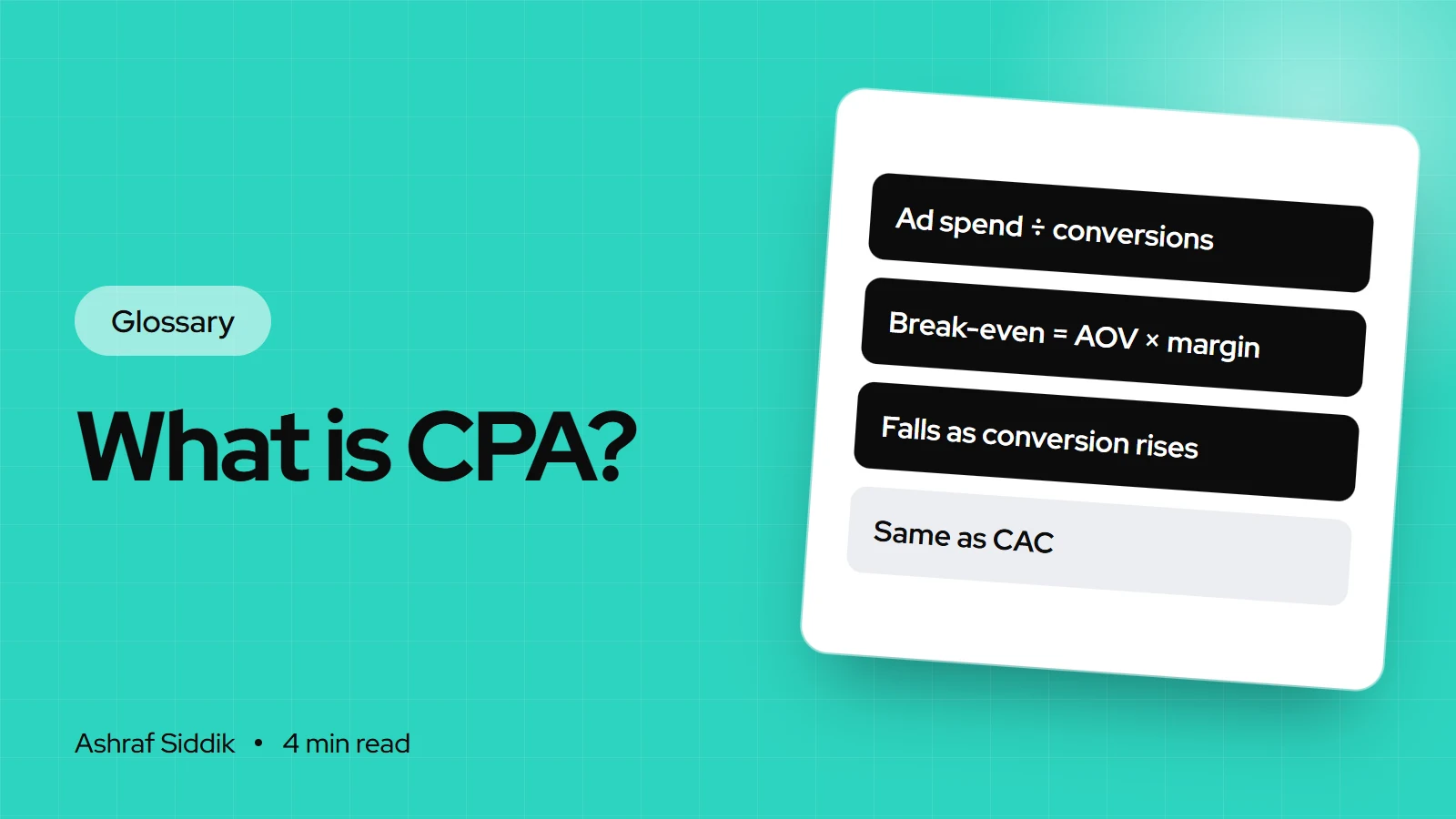
What Is CPA (Cost per Acquisition)? How to Calculate and Lower It
Cost per acquisition is what you pay in ads for each conversion, usually an order. Here is the formula, how to set a target CPA you can afford, and the store changes that bring it down.
-
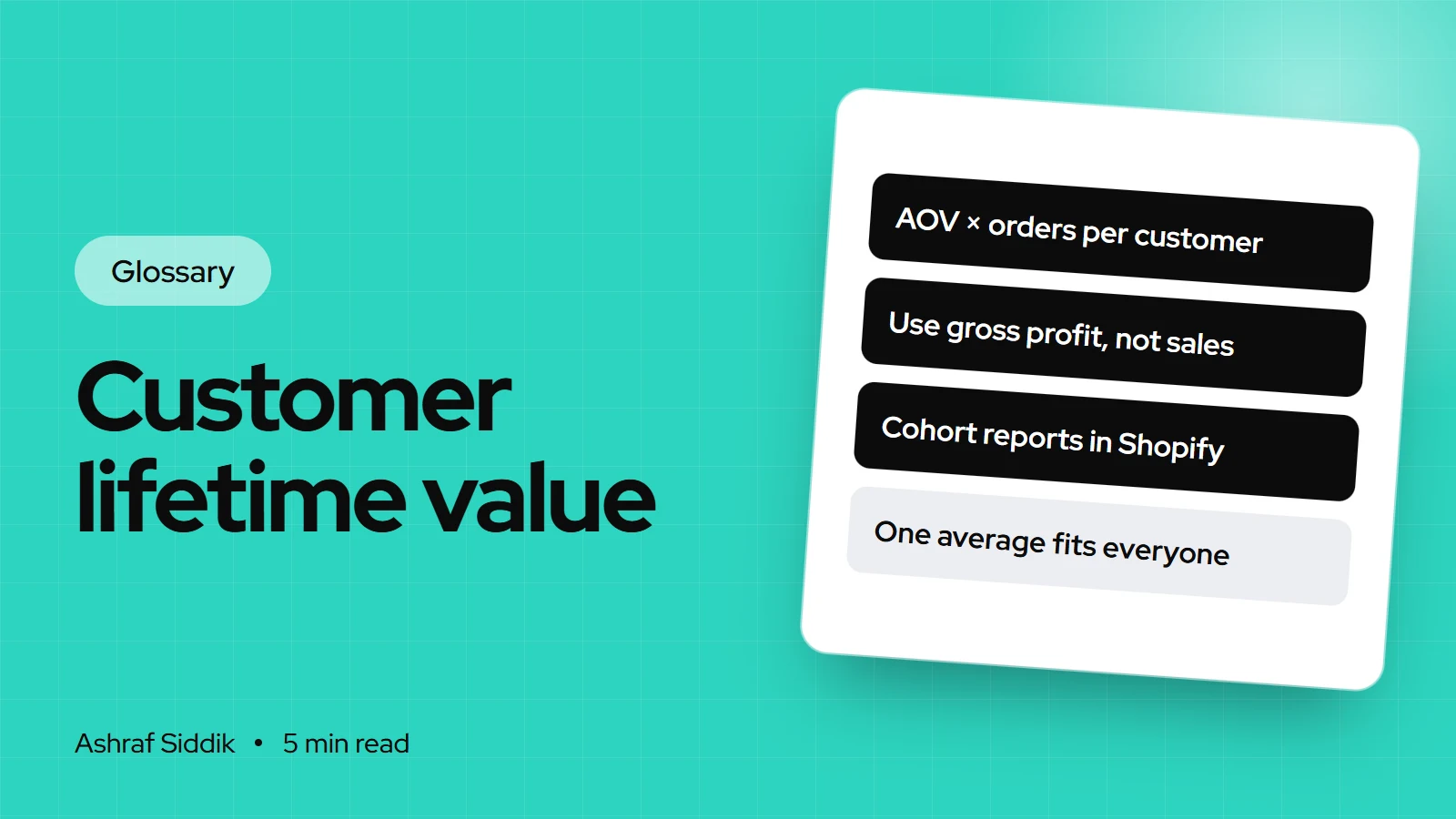
What Is Customer Lifetime Value (CLV)? Definition, Formula and Shopify Examples
Customer lifetime value is what a customer is worth to your store over every order they place. Here is the formula, a worked example, and where Shopify shows the numbers.
-
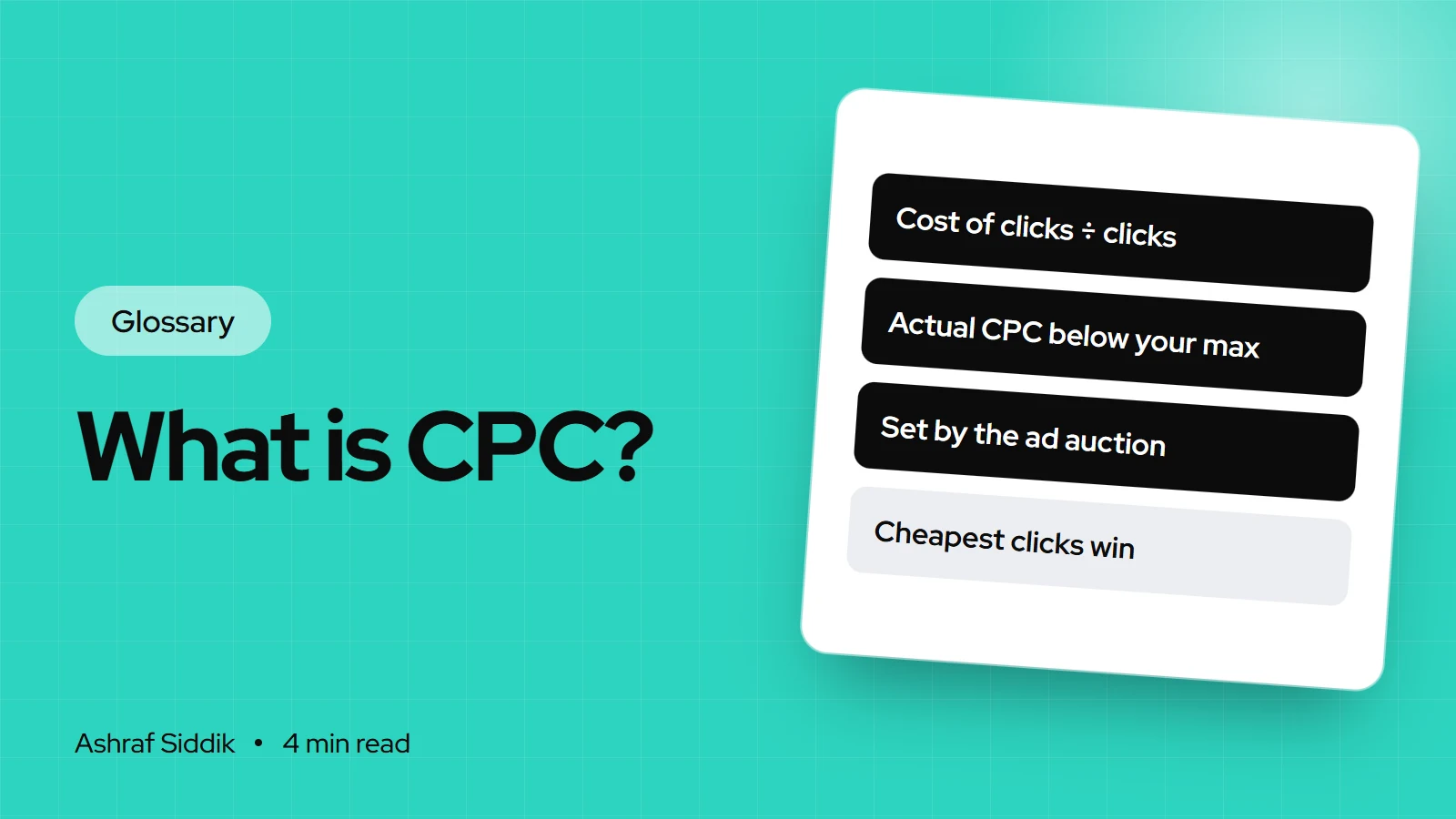
What Is CPC (Cost per Click)? What Shopify Brands Should Expect to Pay
Cost per click is what you pay each time someone clicks your ad. Here is how it is calculated, what decides it, and how to work out the most your store can afford to pay.
-
What Is an Attribution Window? Meta, Google Ads and GA4 Explained
An attribution window is how long after a click or view a sale can still be credited to an ad. Here are the defaults on Meta, Google Ads and GA4, and why your platforms report more sales than Shopify.