Shopify questionAnswer4 min read
Is Dropshipping Still Worth It in the UK?
It can be, but not in the form most courses sell. Here is what UK rules, fees and delivery times do to a dropshipping margin, and when it still works.

Key takeaways
- Dropshipping in the UK still works for sellers with a real niche, fast UK or EU suppliers, and margins that survive ads, fees and returns.
- On imported consignments of £135 or less sold to UK consumers, the seller must charge and account for UK VAT at the point of sale.
- UK online customers can cancel up to 14 days after delivery, and you must deliver within 30 days unless you've agreed otherwise.
- You're the seller in law. Late, faulty or wrong items from your supplier are your problem, not theirs.
- Who it is for
- UK sellers weighing up dropshipping
- Time needed
- 4 minutes to read
- What you need
- A product idea and supplier prices
Dropshipping can still be worth it in the UK, but not the generic version sold in online courses. It works when you have a clear niche, suppliers who deliver quickly from the UK or EU, and a margin that still stands after VAT, card fees, advertising and refunds. Cheap products shipped slowly from overseas tend to fail on UK delivery expectations and consumer rules, not on the store itself.
I'm a Shopify developer, so I'm biased toward people starting stores, but I'd rather you start one that can make money. The rules below come from GOV.UK and the fees from Shopify, checked on 7 November 2026. This isn't tax or legal advice.
What makes it harder than it looks
- VAT on imports. For consignments worth £135 or less sold to UK consumers, GOV.UK says "the seller must charge and account for VAT at the point of sale". Over £135, normal import VAT and customs duty apply at the border, which can mean a surprise bill for your customer.
- Delivery expectations. GOV.UK says you must deliver within 30 days unless you've agreed otherwise. Shoppers used to next-day delivery rarely wait that long without complaining.
- Cancellation rights. Customers can cancel up to 14 days after delivery, and you must refund within 14 days of getting the item back, including the standard delivery cost they paid.
- Advertising costs. Most dropshipping stores rely on paid traffic, and that cost per order is usually the biggest line in the sum.
A margin example
Here's an illustrative order on Shopify Basic with Shopify Payments. The product and ad figures are examples, not benchmarks; the card fee is Shopify's standard UK online rate of 2% + 25p.
| Line | Example amount |
|---|---|
| Selling price | £30.00 |
| Product and delivery from supplier | £12.00 |
| Card fee (2% + 25p) | £0.85 |
| Ad cost per order | £9.00 |
| Refunds and returns allowance | £1.50 |
| Left before VAT, plan and apps | £6.65 |
If you're VAT registered, part of that £30 is VAT and never yours. Then come the Shopify plan (£25 a month, or £19 billed yearly, on Basic) and any paid apps. A product that looks like a £18 margin on the supplier site can be a few pounds by the time it's real. Run your own numbers in my free dropshipping profit calculator.
When dropshipping is worth it
- UK or EU stock. Suppliers with UK warehouses can deliver in days and handle returns locally.
- A niche with real demand. Products people search for, where you can add knowledge, bundles or better content.
- Higher order values. Fixed costs per order hurt less on a £60 basket than a £15 one.
- Testing before stocking. Many brands use dropshipping to test demand, then hold their best sellers themselves.
When it isn't
If your only plan is cheap trending products, long shipping times and paid ads, the numbers rarely hold in the UK. Print on demand is a close cousin with more control over the product; my print on demand store page explains how those stores are set up.
If you sell outside the UK
EU and the Netherlands: imports have their own VAT rules, including the OSS and IOSS schemes, covered in my guide to EU OSS VAT on Shopify. Australia: GST rules apply to low-value imported goods, so check them before selling there. US: sales tax depends on the states where you have nexus. Each market also has its own return rights and delivery expectations.
Rules you must meet in the UK
Tell customers about the 14-day right to cancel, show delivery times honestly, refund on time and handle faulty goods properly. My guide to consumer rights and returns rules walks through each one. Check supplier terms on returns before you list anything, because you carry the obligation.
What to do next
- Pick suppliers who deliver to UK customers quickly and accept returns.
- Model one order end to end, including ads and refunds.
- Start small with a few products, then build the store properly once something sells. My store design and development starts from $300 when you're ready.
Free tools
Check your own store
Free, no sign-up. Each one runs a part of this guide for you.
Frequently asked questions
Is dropshipping still profitable in the UK?
It can be, with fast UK or EU suppliers, a clear niche and margins that survive ads, card fees, VAT and refunds. Generic products shipped slowly from overseas usually struggle.
Do I charge VAT on dropshipped goods from China?
For imported consignments of £135 or less sold to UK consumers, GOV.UK says the seller must charge and account for VAT at the point of sale. Get tax advice for your setup.
Do I have to accept returns as a dropshipper?
Yes. UK customers can cancel online orders up to 14 days after delivery, and you must refund within 14 days of getting the item back.
How long can delivery take in the UK?
GOV.UK says you must deliver within 30 days unless you've agreed otherwise with the customer. Long delivery times also hurt reviews and repeat orders.
Do I need to register for VAT to dropship?
You must register once taxable turnover for the last 12 months goes over £90,000. Separate rules apply to imported goods of £135 or less, so check how they affect you.
Is dropshipping worth it in 2026?
It's worth it for sellers who treat it as a real business with good suppliers and honest numbers. It's rarely worth it as a quick, hands-off income idea.
Sources
- VAT and overseas goods sold directly to customers in the UK, GOV.UK
- Online and distance selling for businesses, GOV.UK
- Accepting returns and giving refunds, GOV.UK
- Register for VAT, GOV.UK
- Shopify pricing, Shopify
Related services and work

I'm a Shopify developer and CRO specialist. I have built and improved Shopify stores since 2018, completed more than 1,000 projects, and hold a 4.96 average rating across 719 client reviews.
More guides
-
How Do I Ship to the Channel Islands and the Highlands?
The Channel Islands are an export for VAT; the Highlands are just a costly UK postcode. Here is how to handle both on a Shopify store.
-
How Does Shopify Shipping Work in the UK?
Shopify Shipping does two jobs: it sets what customers pay at checkout and lets you buy labels in your admin. Here is how both work for UK stores.
-
How Do I Ship Large and Heavy Items in the UK?
Shopify's built-in UK carriers stop at 20 kg. Here is what each one takes, what to use beyond that, and how to charge customers properly.
-
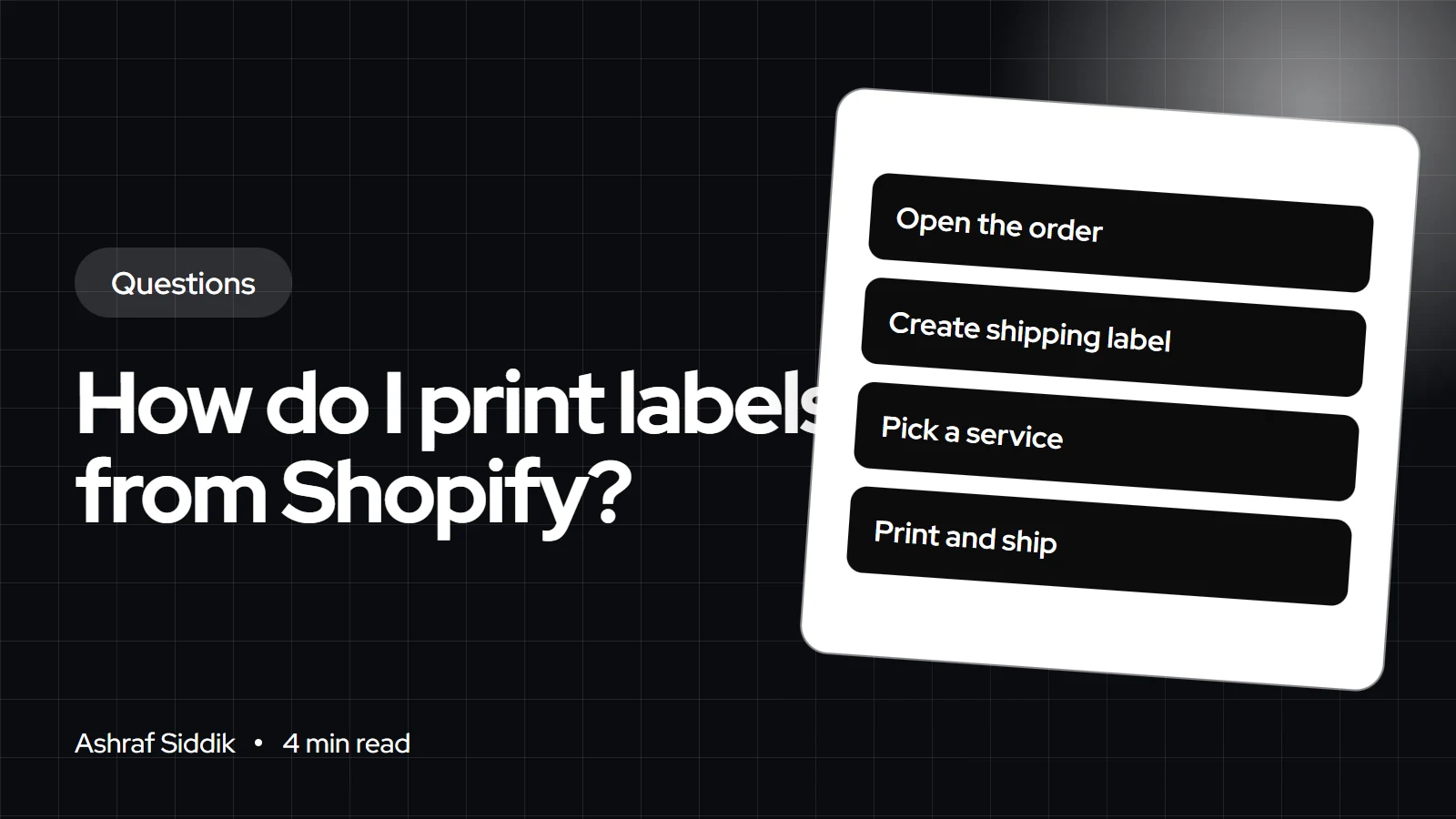
How Do I Print Shipping Labels from Shopify in the UK?
You can buy and print a Royal Mail, DPD or Evri label from any order in a couple of minutes. Here are the steps, the printers that work, and the rules to know.